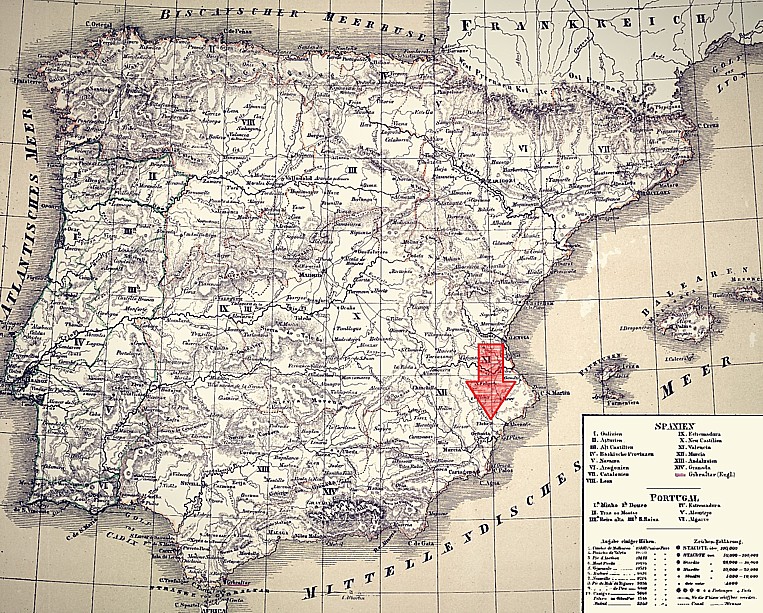
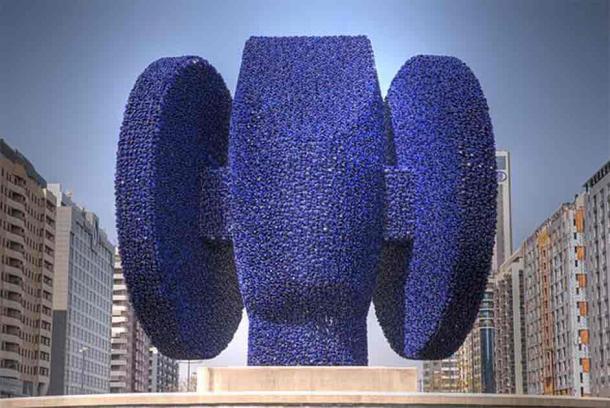
On August 04, 1897, at an ancient roman site a few miles in from Spain’s southern coast near the city of Elche, a 14 year old boy named Manuel turned over a stone, and he came face to face with a forgotten part of the history of the Iberian Peninsula.
The stone wasn’t a stone after all – well, it was stone, but it was actually a carved bust of such intricacy and beauty that this boy’s discovery challenged the minds of archeologists from then, until now. This was the Dama de Elche, or the Lady of Elche, and would become one of Spain’s most famous historical emblems.
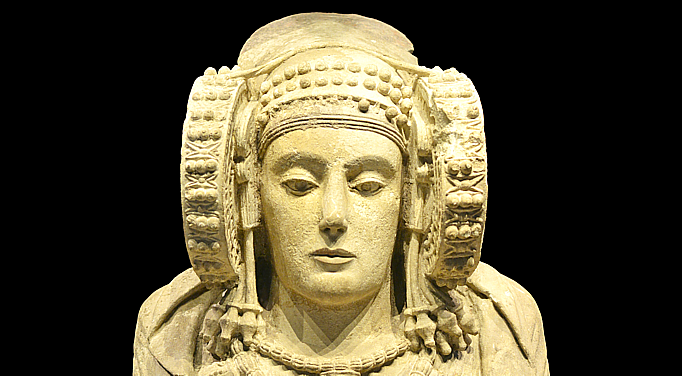
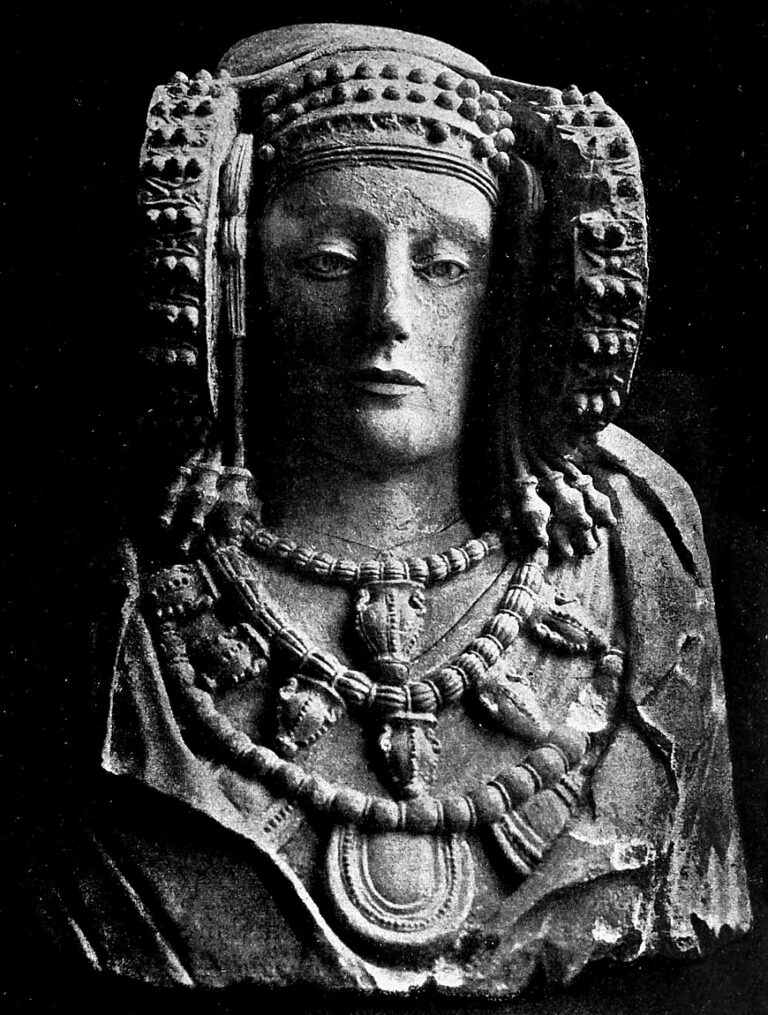
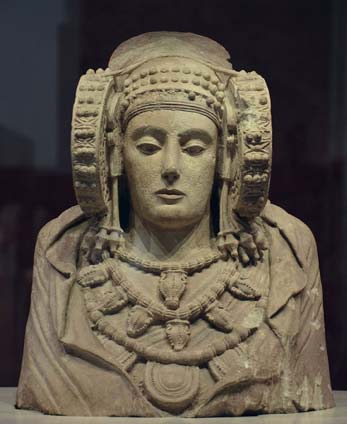
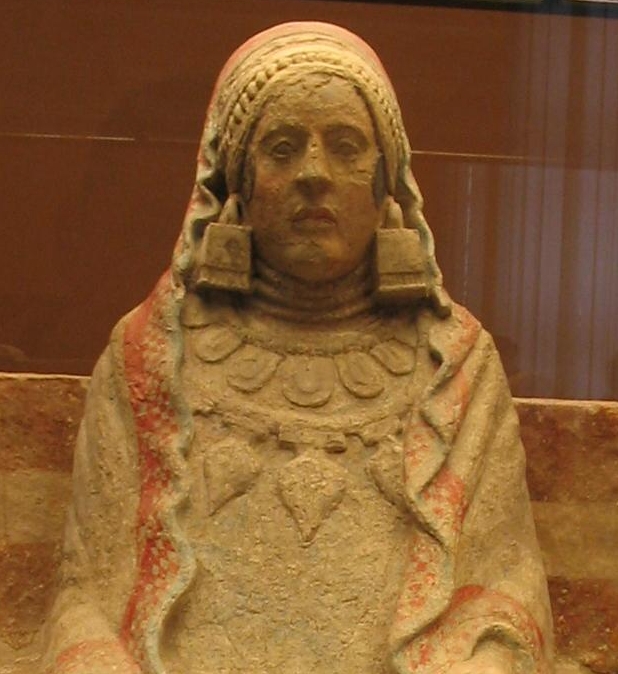
The limestone sculpture of a regal looking woman is thought to have been carved in the 4th century B.C. The bust weighs 143 pounds (65 kg), and she is 22 inches (56 cm) tall and 14.5 inches (37 cm) deep at its base. It is hollowed out on the inside with a large hole in the back. This is a similar construction to other Iberian statues, several of which have hollowed out recesses in the back. Intensive inspections of the statue revealed that there were minute traces of human remains located within the statue at one time, which strongly suggests that this served as a funerary urn.
She had been sculpted with a countenance of deep, almost meditative thought, eyes slightly closed, her expression almost inducing the viewer to take on a hushed quality in themselves when first viewed. Though devoid of paint today, inspection has shown that it was originally painted in bright colors.
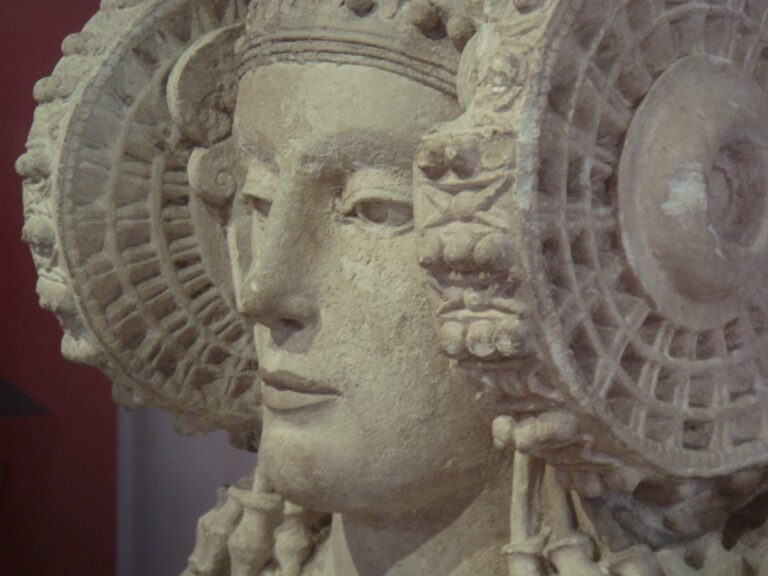
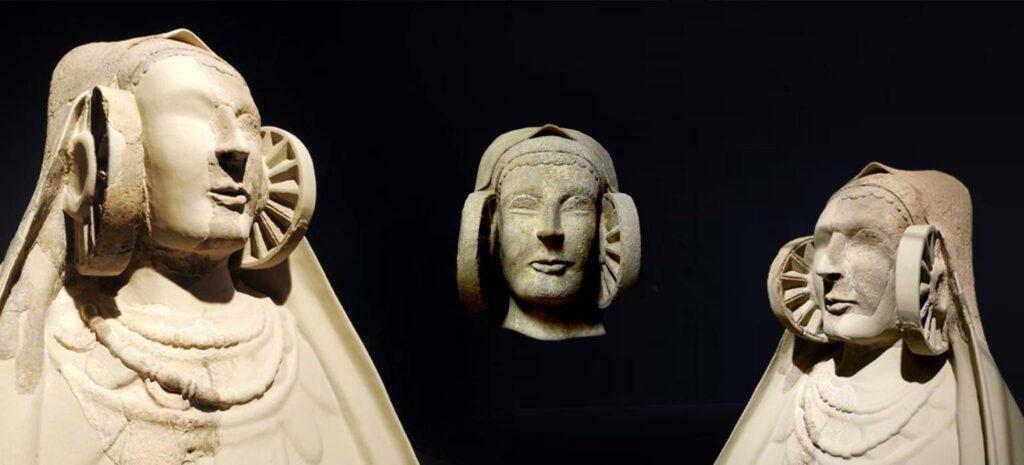
But the most striking aspect about the Lady of Elche is her headwear. She is adorned with large circular wheels, called rodetes, on either side of her head almost covering the entire head when viewed from the side. The rodetes have many rounded nodules on them indicating that they may have been jewels in real life. The headgear encompasses the forehead, and tasseled earing-like jewelry hang down in front, almost running into several necklaces.
The limestone bust has been scrutinized by different scientists over the years, and many theories have been forwarded, as have more than a few speculations. At the core of these speculations are the unique rodetes on the side of her head.
There is no disputing that the Lady of Elche is an enigmatic sculpture, with unusual features, including an elongated head, best seen from the sides and rear, and the strange rodetes. Her likeness is alluring and it is intriguing to contemplate that there may be something else to the bust of the Lady of Elche. Many have suggested that she was a high priestess of Atlantis or an alien visitor to the earth, and that the rodetes were some form of ancient or alien technological device for communication, and for evidence it has been pointed out that they look very much like modern satellite dishes or headphones.
Cosplay_of_Leia_Organa_Solo_at_Brussels_Comic_Con cc2.0 by Miguel Discart
Headphones - photo by Blaz Erzetic
However, more realistic interpretations concerning the rodete headwear contend that they are elaborate adornments similar to what a priestess or high-status lady might have worn, especially for a formal ceremony. This is furthered by the included sculpture of jewelry including tassels and a necklace.
The Lady of Elche, photo by Carole Raddato CC BY SA 2.0
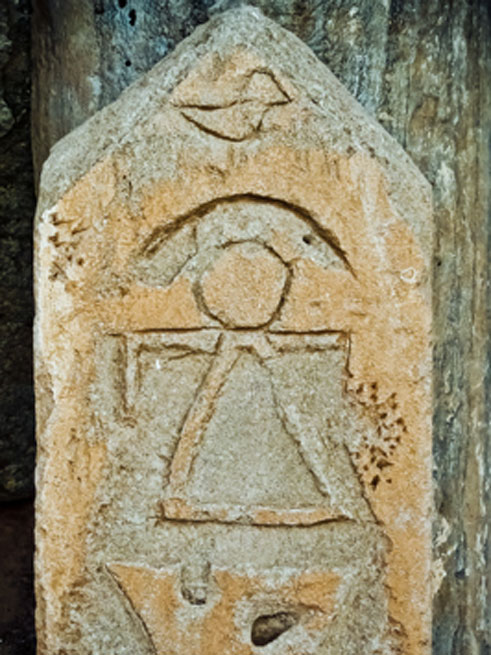
Some have proposed that this could be a depiction of the goddess Tanit, worshiped by several peoples in the Mediterranean area. Tanit was the goddess of civilization and wisdom as well as fertility, with fertility symbols often accompanying her depictions. Yet there are no such symbols found on this bust, which helps to keep that attribution open to discussion.
Representació guarnida de la deessa Tànit - PDImage
Symbol-of-Tanit Symbol of Tanit, the consort
to the king of the Punic pantheon.
(mrholle CC BY-SA 2.0)
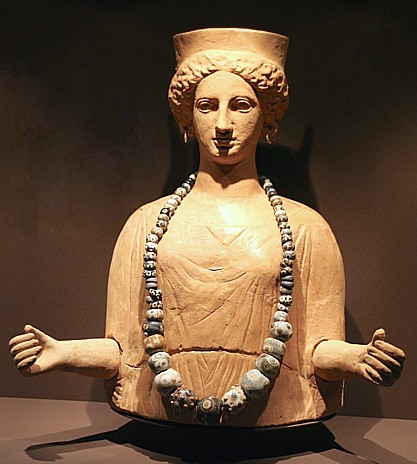
In 1906 an archeologist named Jose Ramon Melida put forth that the carving of La Dama de Elche was of such high quality for the time it was carved, that it must have been from Greece. This was evidenced by there being no such locally attributed carvings found on the Iberian peninsula up to that time that could match the delicate intricacies found on this bust. His theory was entertained for a while, but more recent discoveries of similarly carved statues were found by archeologists in Spain, such as the Lady of Baza in 1971 and the Lady of Guardamar in 1987.
Dama_de_Baza_detail
Creative Commons 3.0
Like the Lady of Elche, the Lady of Baza is also thought to be a funereal statue of a goddess dating from the 6th Century B.C.
In Guardamar, a few miles from Elche, the Dama de Cabezo Lucero was uncovered, and though she needed to have extensive repairs, it was evident that she was also adorned with rodetes, though not as finely depicted as the Lady of Elche’s rodetes.
Dama de guardamar - Photo by Desconocido CC4.0
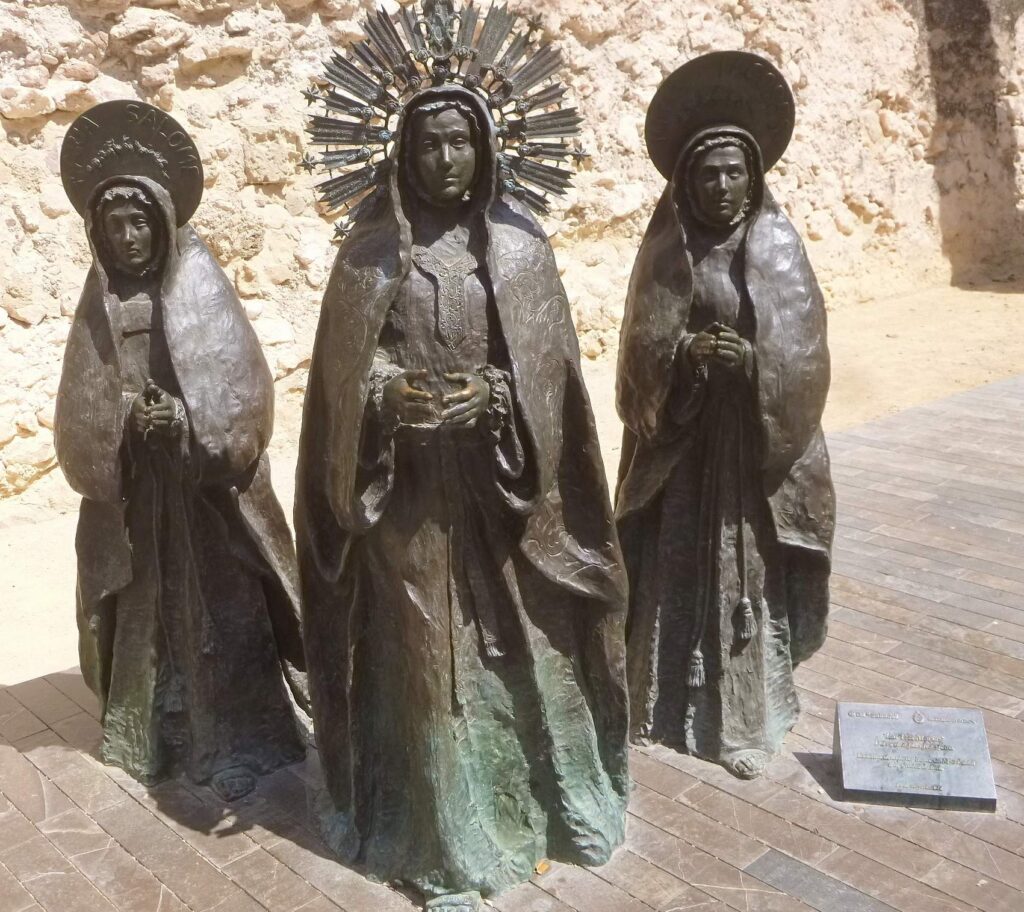
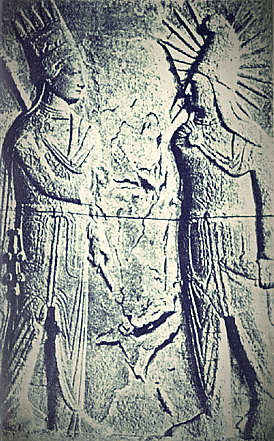
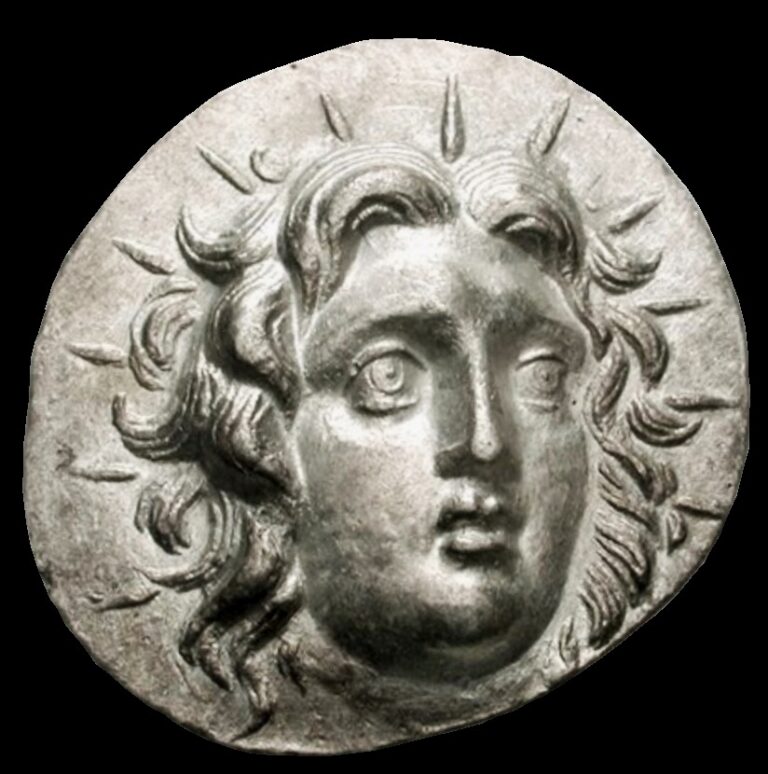
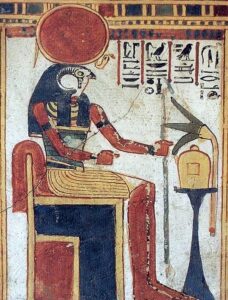
Circular headwear in and of itself is, however, not as unique an aspect as it may seem. Religious artwork, especially in paintings, but often enough on statues themselves, show saints represented with halos, designating spiritual persons as well as those who have attained sainthood. But the halo in artwork predates its use in Christian art. Greek and Egyptian gods long adorned halos and sun or moon disks when they were depicted. Some even claim that these depictions on ancient gods are why human rulers adopted the wearing of crowns, as a sign that their rule was divinely attributed – and sometimes that they themselves were the gods.
Elche Esculturas Chirstian Sants - PDImage
Mithras and Antiochus I shaking hands 69-34 B.C - PDImage
Silver tetradrachm of Rhodes showing Helios and a rose 205-190 BC - PDImage
Sun god Ra with Sundisk halo - PDImage
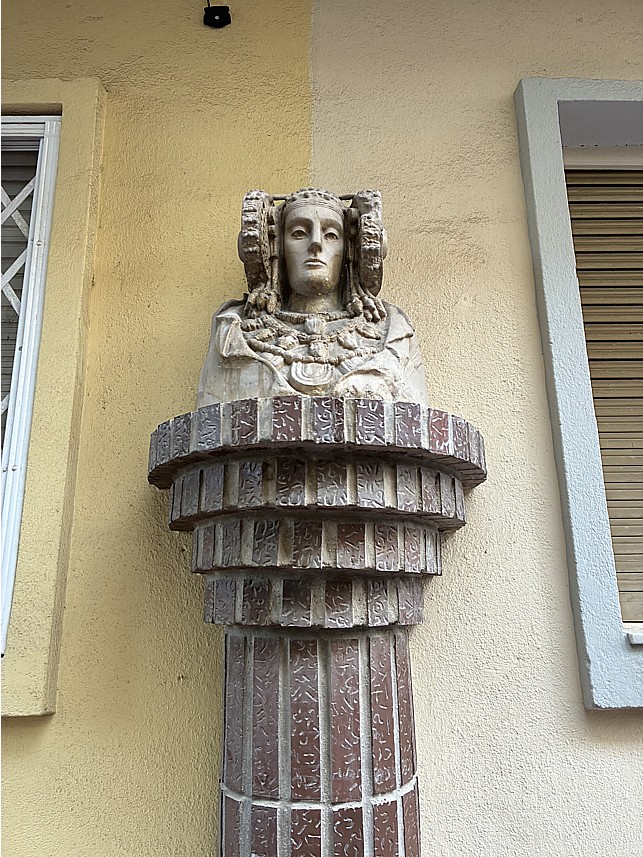
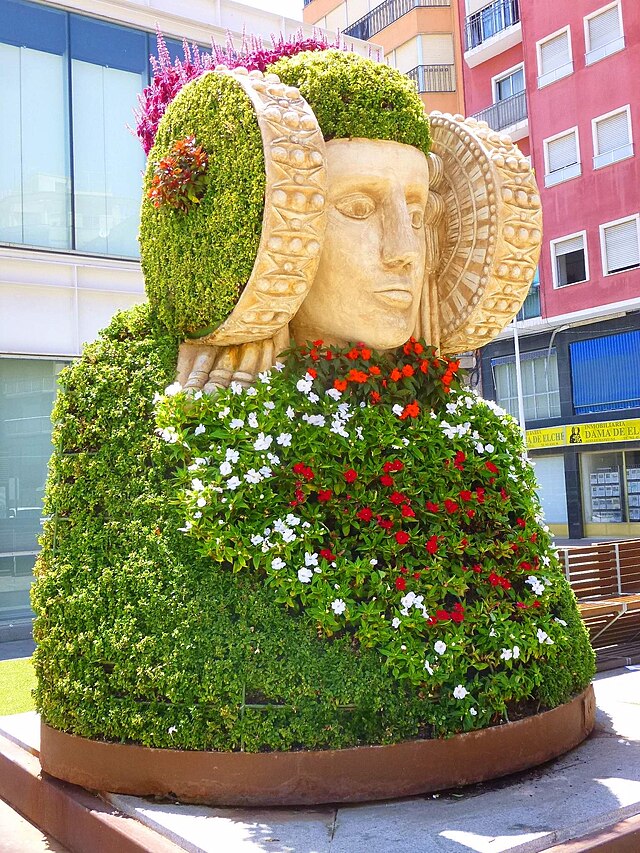
La Dama de Elche has since become one of Spain’s most notable antiquities and enjoys a fame that the lady herself could not have hoped for when alive. She is depicted all over in and around Elche, from topiary to graffiti, wall decorations, several statues and even modern artistic “reinterpretations” that look nothing like La Dame de Elche, but are still, somehow, recognizable as such.
Elche Dama Floral 2 Chia Pet - PDImage
Sculpture made up of miniature duplicate figures.
Sculpture made up of miniature duplicate figures -Photo by Emilio Garcia CC BY-SA 2.0
Whether you think of her as a noble woman commemorated in stonework, or an Atlantean priestess, a goddess, or even an ancient alien visitor, one thing is certain: the carving is an exceptional masterpiece of ancient history that will continue to intrigue us all.
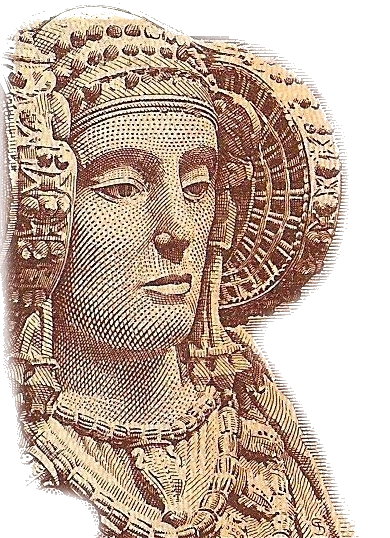
On the 19th of June, 1948, Spain honored La Dama de Elche by placing her prominently on the 1 Peseta banknote. The Pick catalog number is P-135. A small cluster of oranges is shown on the back.