Generations pass and with them, so too much of history. Not just textbook history, but colloquialisms in language, traditions, mannerisms, meaning and even old favorite spots to hang out, and dreams once dreamt, perhaps dreams that came true, are erased without consideration. But, sometimes, there are clues that, even though no trace can be dug up, we can peer through the keyhole of history and see into that darkened realm of forgotten memory… and what we see, is not so very different from out own selves at any moment.
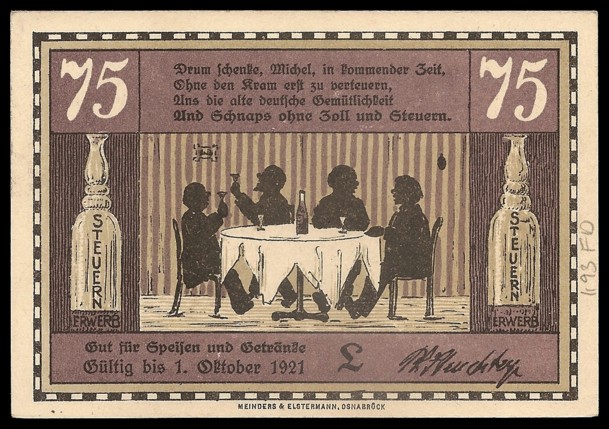
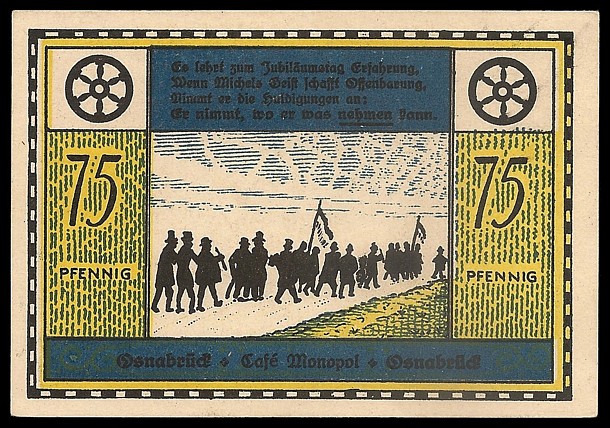
This clue, a German Notgeld, Serienscheine (series of notes) gives us such a glimpse. During this period of time, amidst scarcity of food, money, and a loss of dignity for many, there was a longing to remember the good times of the past. As a result, a sort of heritage preservation movement (heimatbewegung) took hold among many of the people, and such things as Notgeld Serienscheine would often depict the stories and scenes from local folklore and history.
In the city of Osnabruck, there was an old café, now long gone and almost undetectable today, that was a popular spot. But as we find in every generation, taxes and fees can apply themselves to such a degree that we try to find a way around them. Perhaps one can flout the law and avoid such things as taxes, but the risk is getting caught. Sometimes this works, and other times … well, let’s say that’s where adventure can come into play, perhaps even getting put into jail. This is where we find such a story: annotated, but translated poorly, assumedly true, but unverifiable at this time, of a certain Michel who, in just such an effort to avoid paying assessed fees, winds up in Notgeld History.
Below is a bit of history, perhaps more folklore than history, about an event that was found worthy enough to remember at the time, and would likely have been all forgotten, saved by a few bits of paper a little more than one-hundred years ago.
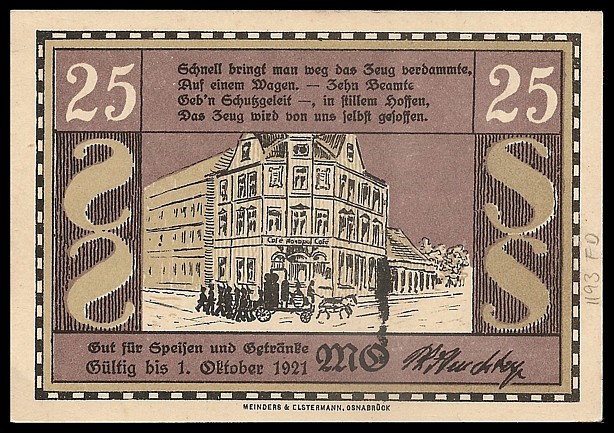
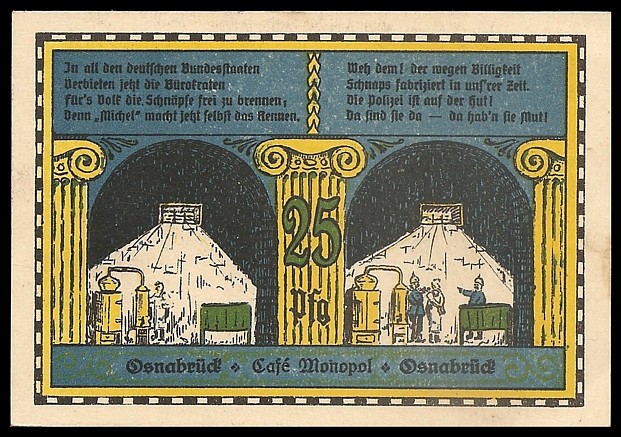
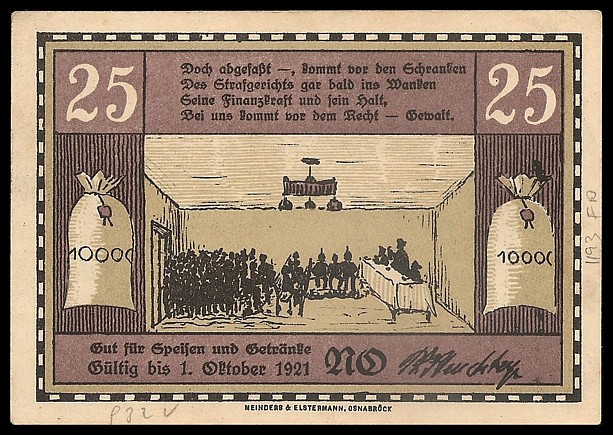
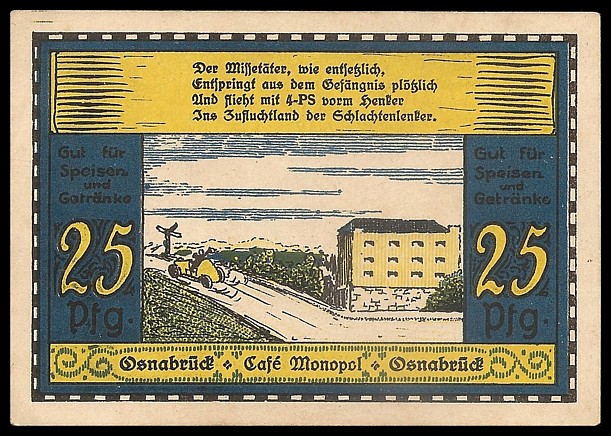
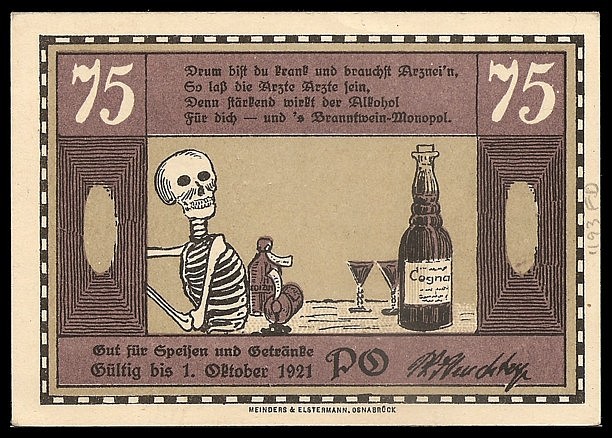
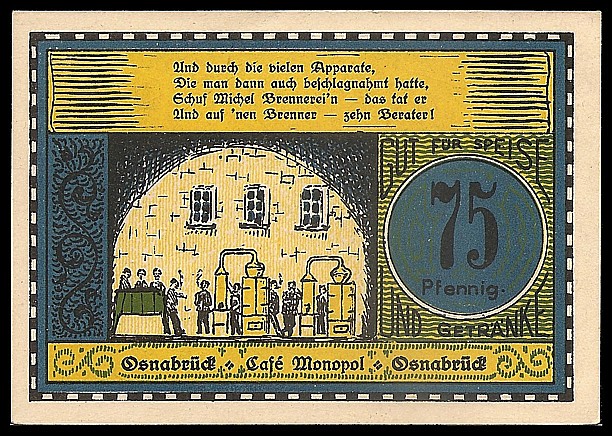
Though direct translation is broken, and the storyline doesn’t seem to match up logically with the increases of denomination that would be expected, but we can still find enough to glean that a certain Michel had tried, unsuccessfully, to skirt the law and brew up a bit of relief for the suffering people. The people need to feel a sense of calm and coziness. Michele’s prescription: alcohol, the medicine that temporarily relieves the sense of suffering for many, but often with serious side effects. But how to get such a thing cheaply, when there are high taxes and fees? Perhaps an illegal brewery! Alas! Michele is caught and brought in front of the magistrate. He seems to have been found wanting for a better defense, and is jailed, albeit only for a time. Adventure awaits! Off Michel goes (at 4 horsepower!) to a distant land where he can seek his own refuge – perhaps in a bottle of schnaps.
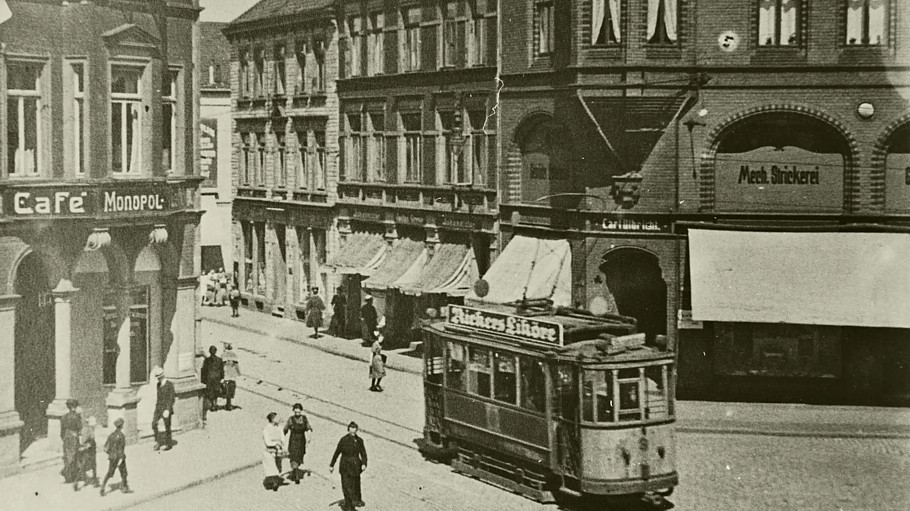
In my attempted research, I could only locate one bit of evidence: A photograph of a streetcar in Osnabruck, which just happened to be passing by the Café Monopol. Enquiries to the local paper concerning this history have not (perhaps not as yet) been answered.