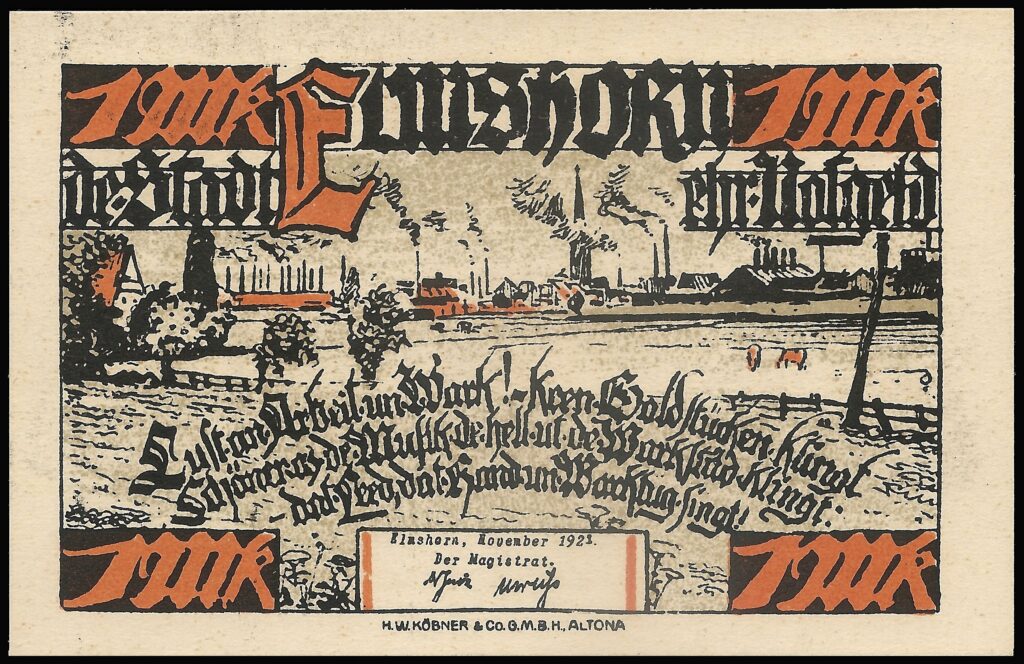
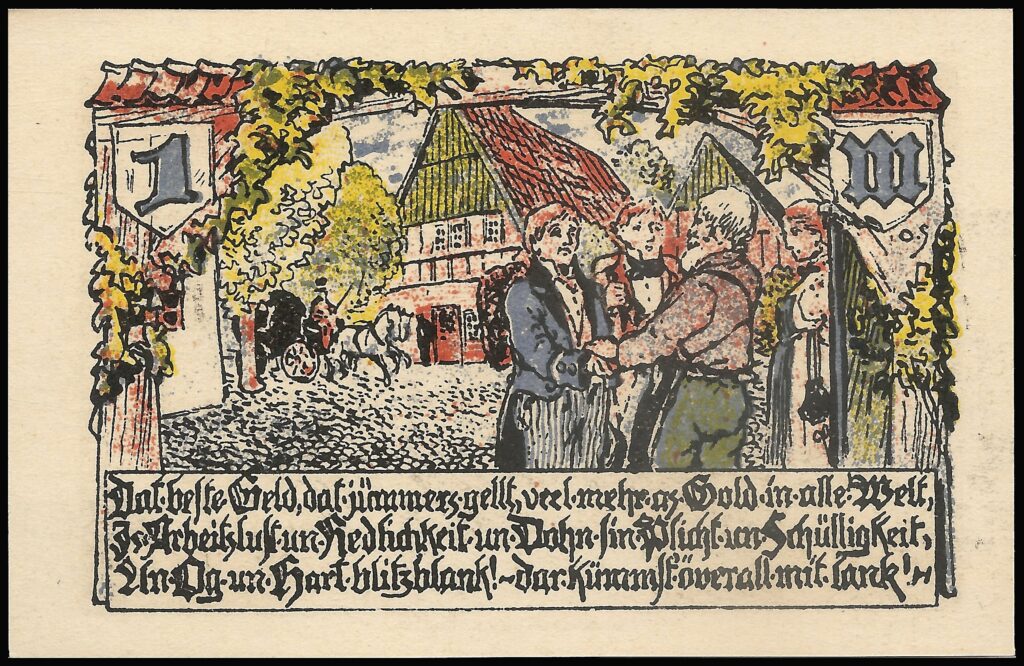
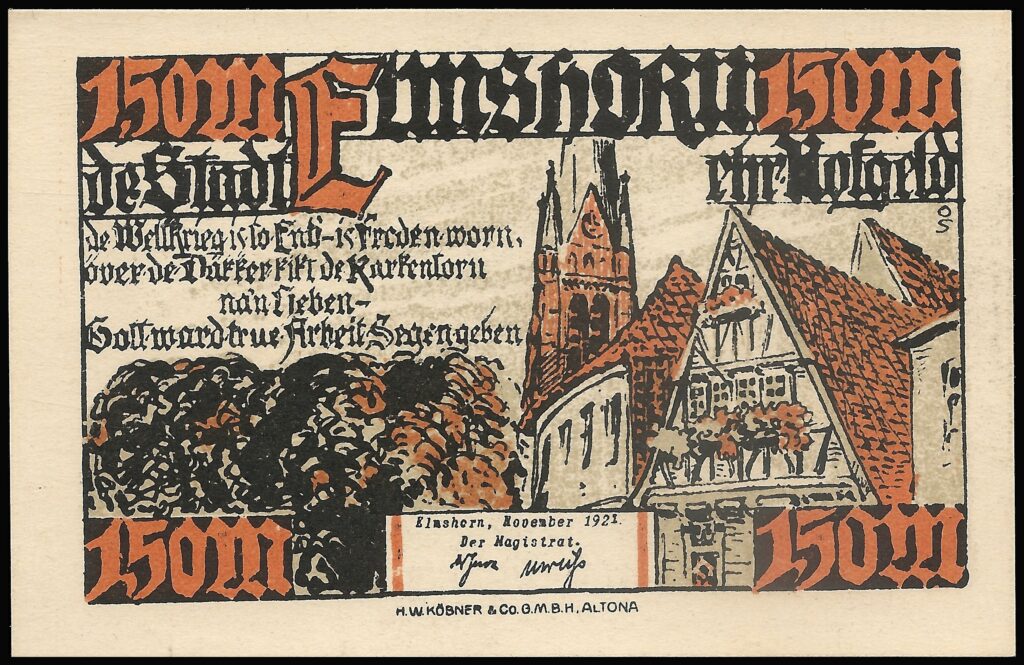
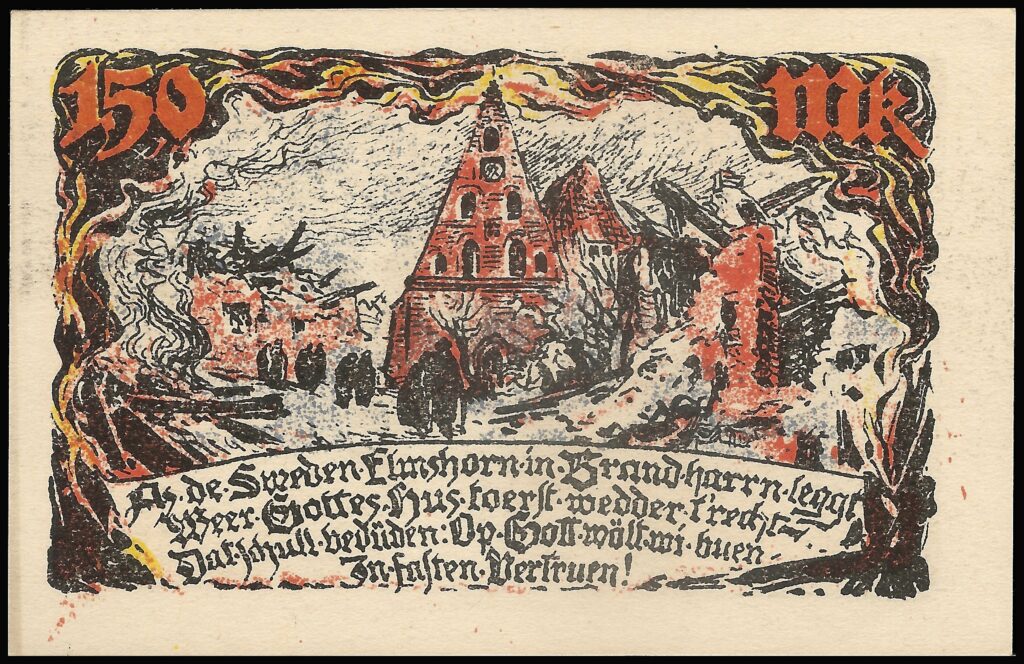
While Notgeld, or emergency money, there were several types of Notgeld issued, we are considering the oddest type: Serienscheine.
Serienscheine is a somewhat different form of currency printed for use in everyday commerce. Serienscheine, or series notes, were a form of Notgeld that was a particularly odd form of Notgeld that was printed primarily as a collectible item rather than use during the economic emergency.
Seriencheine is very odd in that it seems to be at odds with the economic hardships plaguing Germany and other European countries, in that collectible banknotes during a time when money was extremely scarce, just boggles the mind. Yet it worked and worked well. Designed with local history, folklore, and artistically attractive, these notes were issued primarily by localities and companies, often issued with their printed validity dates already expired, which provided immediate cashflow and profit in the local areas. It would be a mistake, however, to say that Serinenscheine were not used in commerce. They themselves were the goods, and this provided a unique spot in the whole system as being both currency as well as product. This is not so odd to the modern collector of banknotes and coins, but during the time of extreme economic necessity, it occupied a unique spot in commerce at the time.
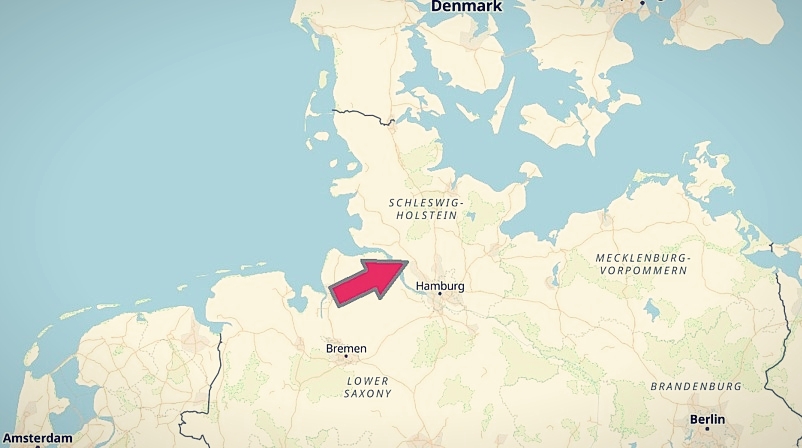
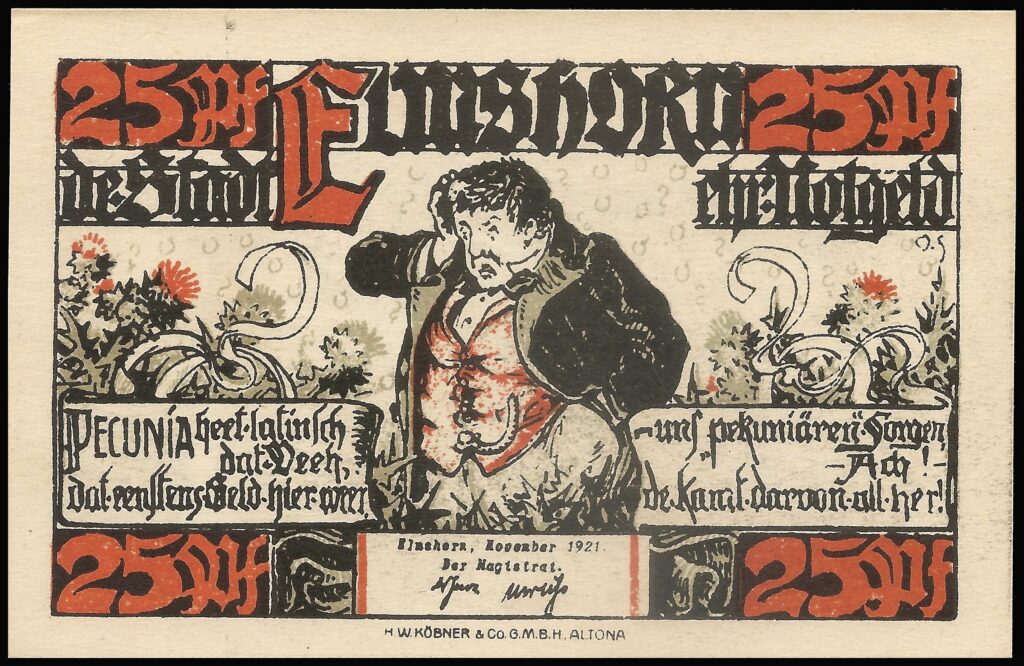
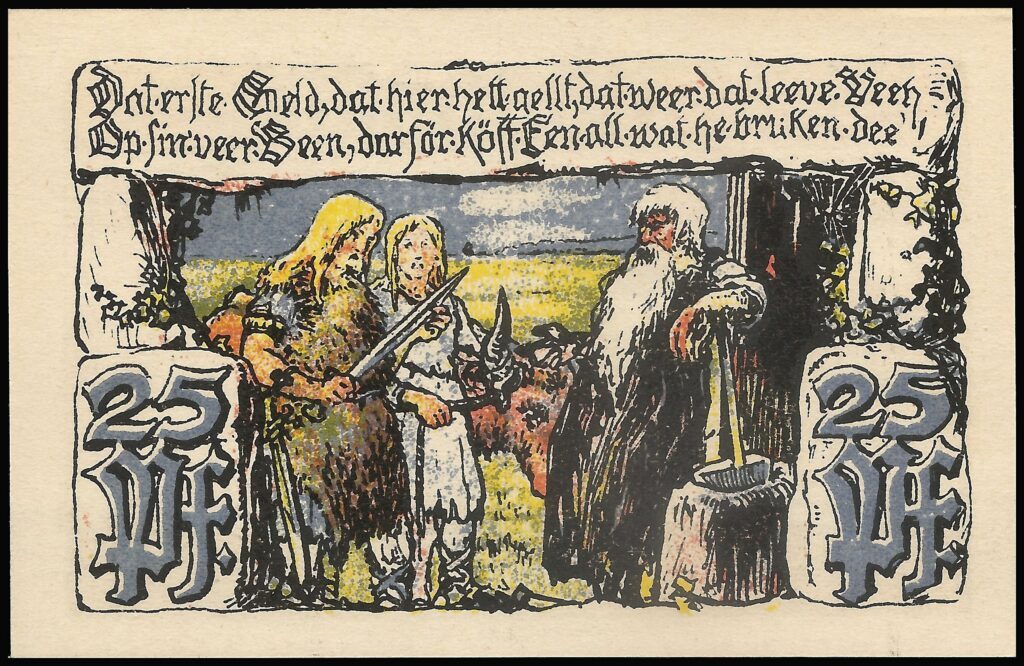
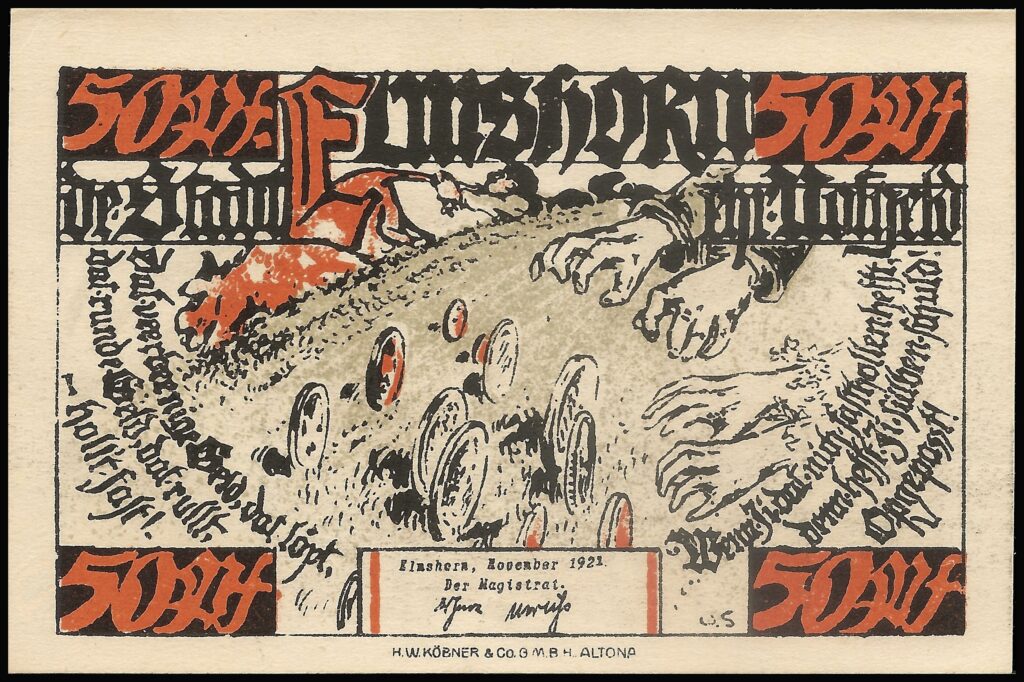
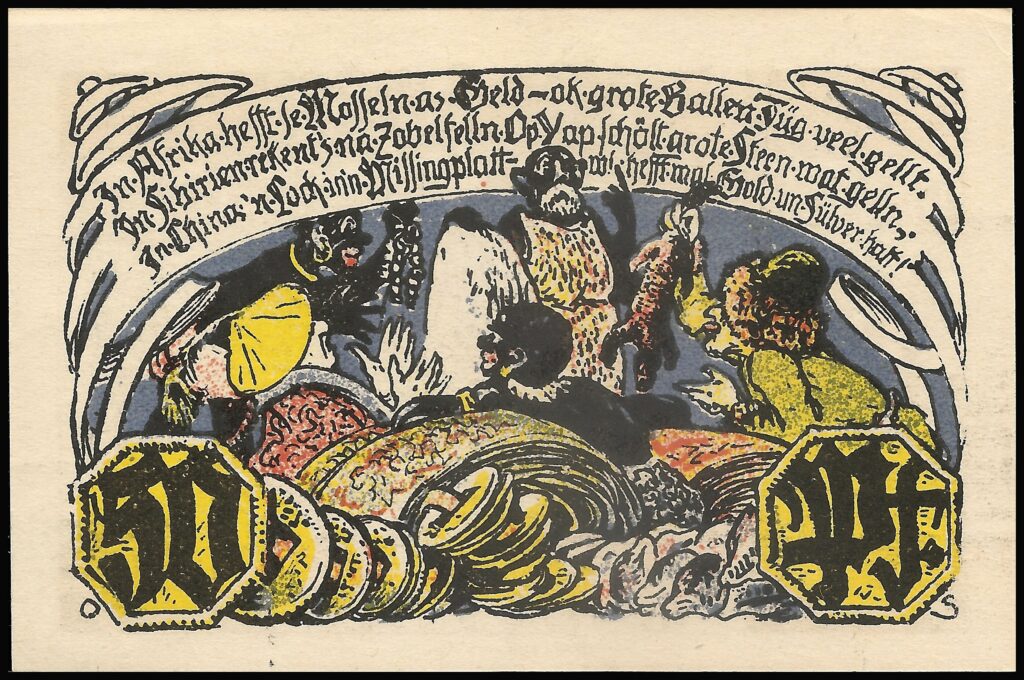
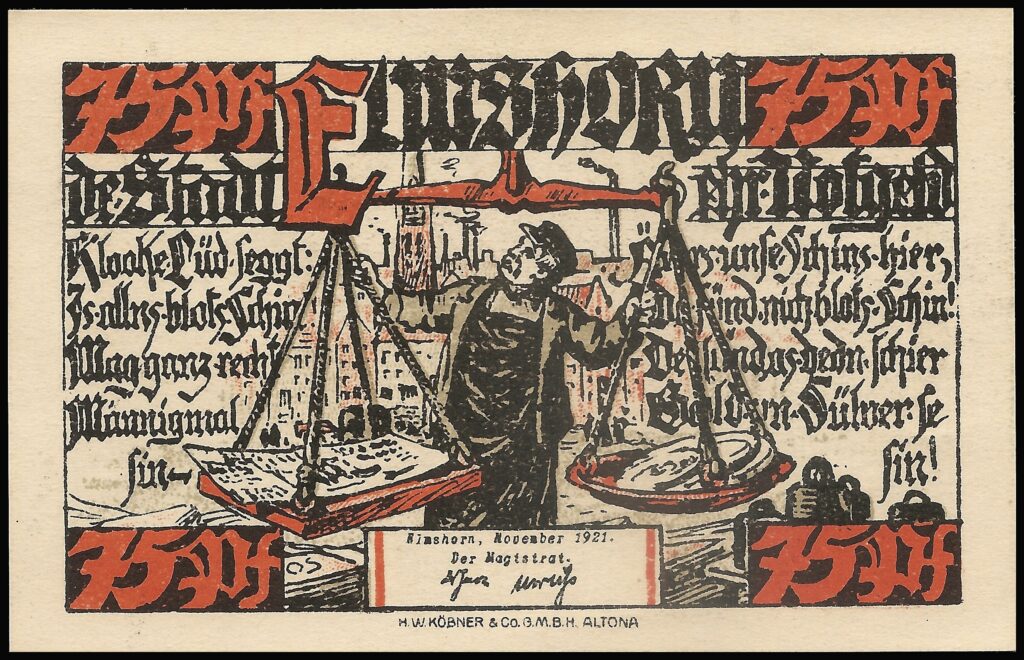
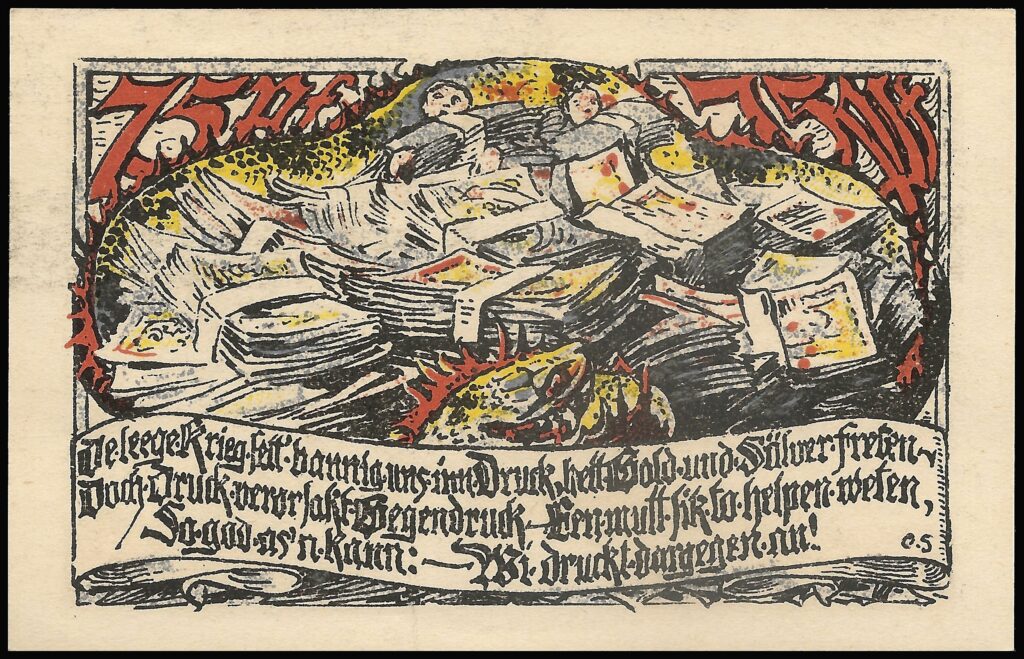
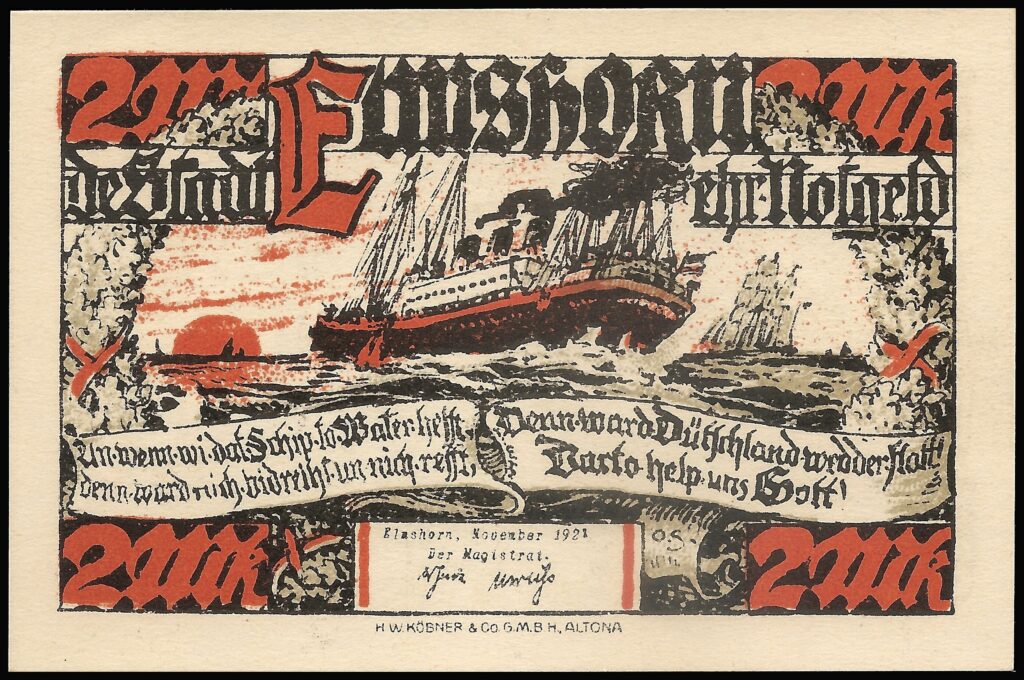
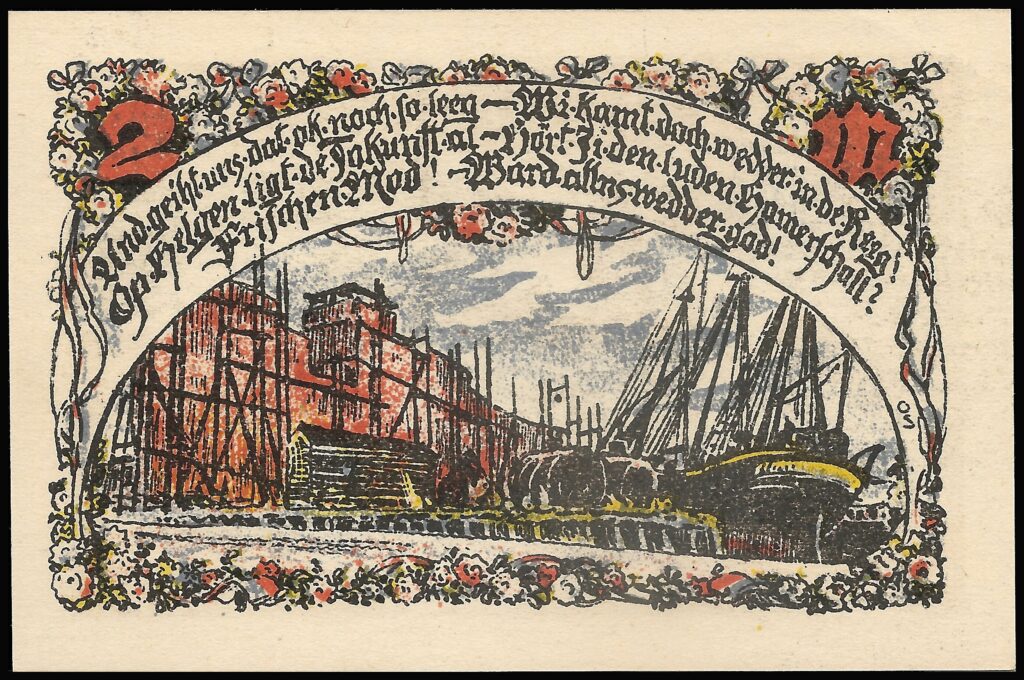
Many issues of Serienscheine are extremely interesting. Some show how much inflation rates over time, others show bizarre images and artwork, some are bland while others are wildly colorful. In the town of Elmshorn, 18 miles (30 km) north of Hamburg, was a valued food and leather processing town, and was not immune to the effects of post war inflation. One of the issues Elmshorn produced included a series concerning monetary history in different parts of the world. This starts us from the age of barter, showing how people had to trade things like cattle for other goods, to the present time, presenting the holder of the Notgeld with a barb: we only have gold and silver: one cannot eat metal, or keep warm with it – a stark realization those modern times.
Notgeld can be difficult to translate as it used modern German dialect as well as a mix of other regional dialects, many used Low German (Platt Deutsch), and Limburgish, but some Dutch and Danish have made it into the mix as well. I’ve even had one that seems to have snuck in some Swedish. Occaisionally there are spelling errors, but by far the hardest is the fonts used. Often times there are stylistic letters used in various forms of script, but a great deal use the old German Fraktur, which is notoriously difficult to interpret without a long time of exposure to it. Tight, bold letters with many odd shapes and serifs are just the beginning, as a few of the letters are quite hard to distinguish from each other. You can see the effects of such in the notes below, which have a basic translation with them.