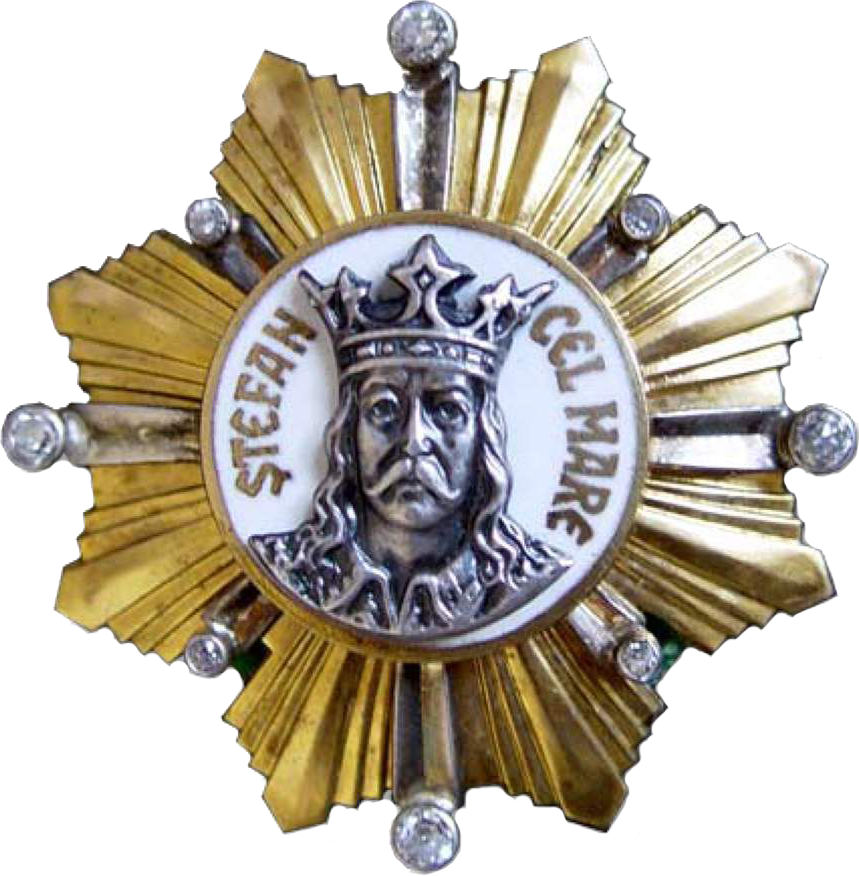
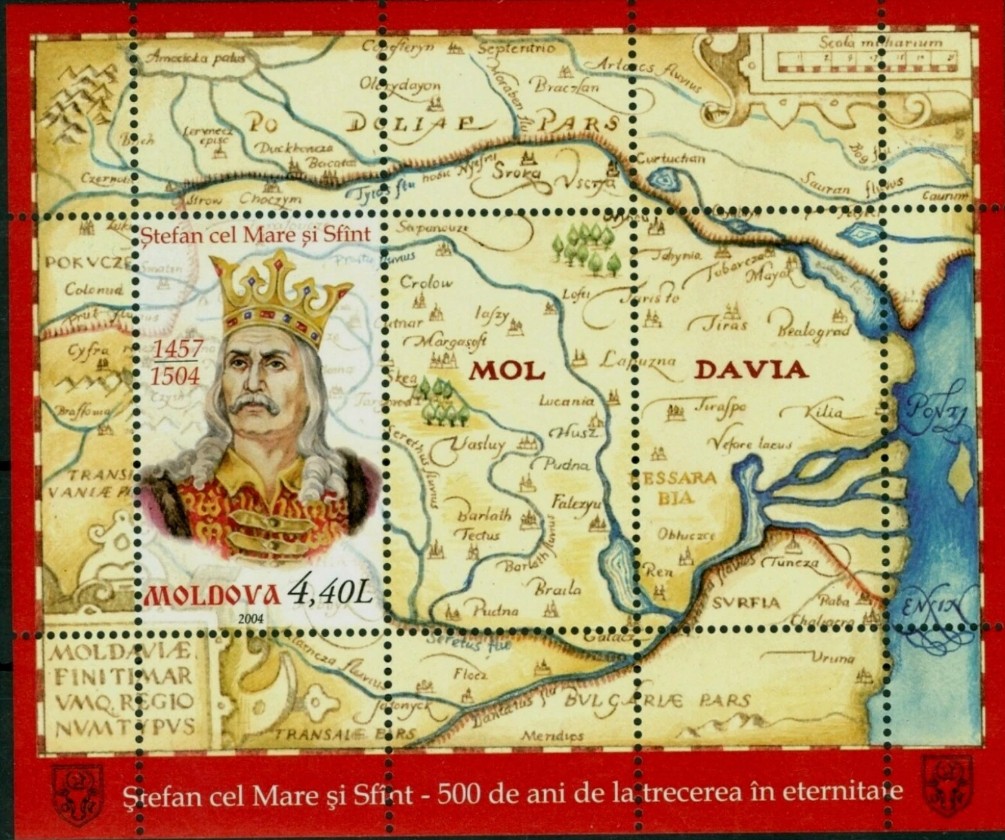
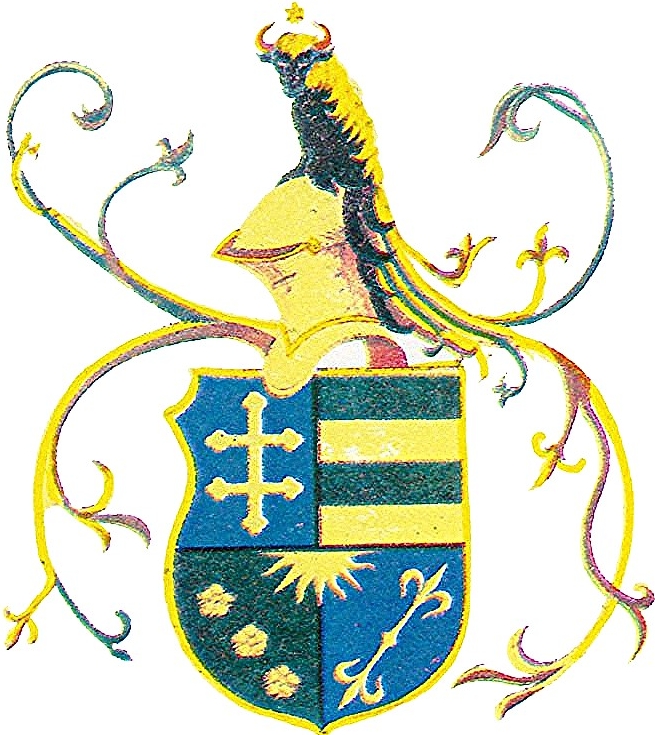
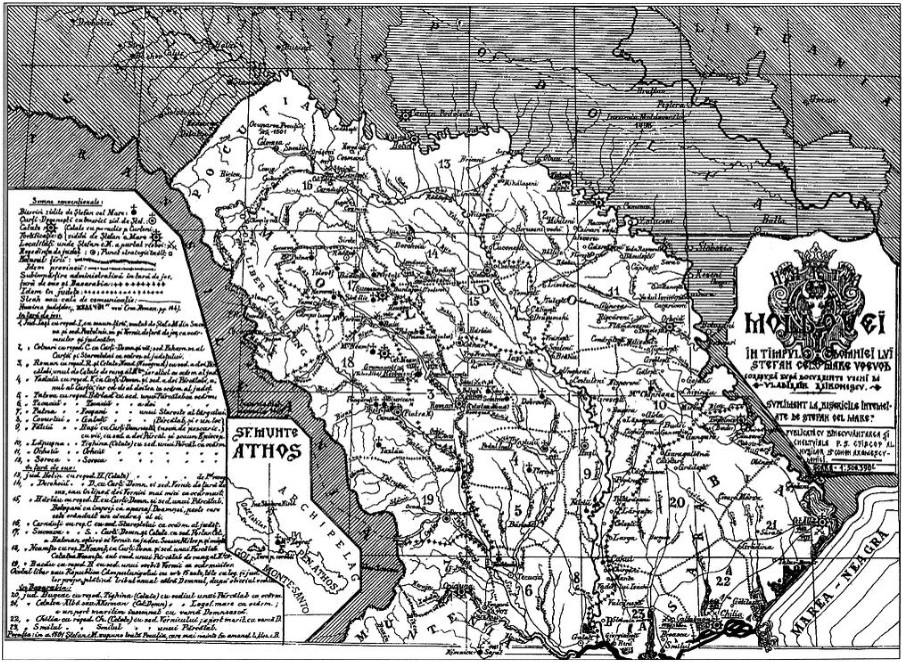
Stefan cel Mare ruled Moldova for 47 years, from 1457-1504. During his reign, Moldova experienced perhaps it’s greatest time in history. Stefan was able to defeat Turks, Tartars, Hungarians, Poles and other enemies – though this was not a lasting victory for Moldova.
Stefan was born into the House of Bogdan-Mușat, a noble family which founded the Principality of Moldavia. This family was torn by internal power grabs and there existed a civil war in the years leading up to Stefan’s reign.
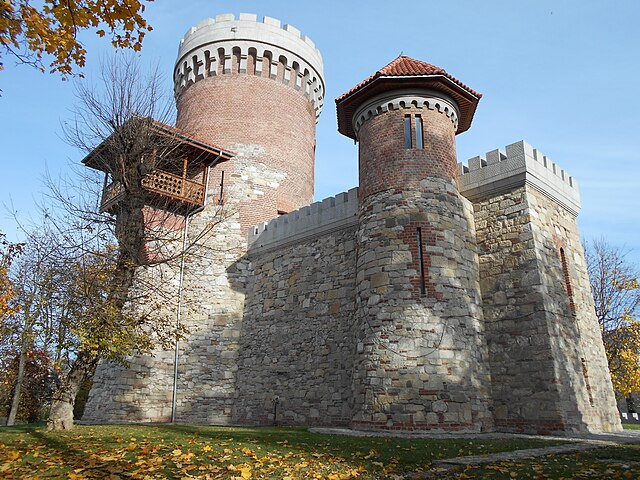
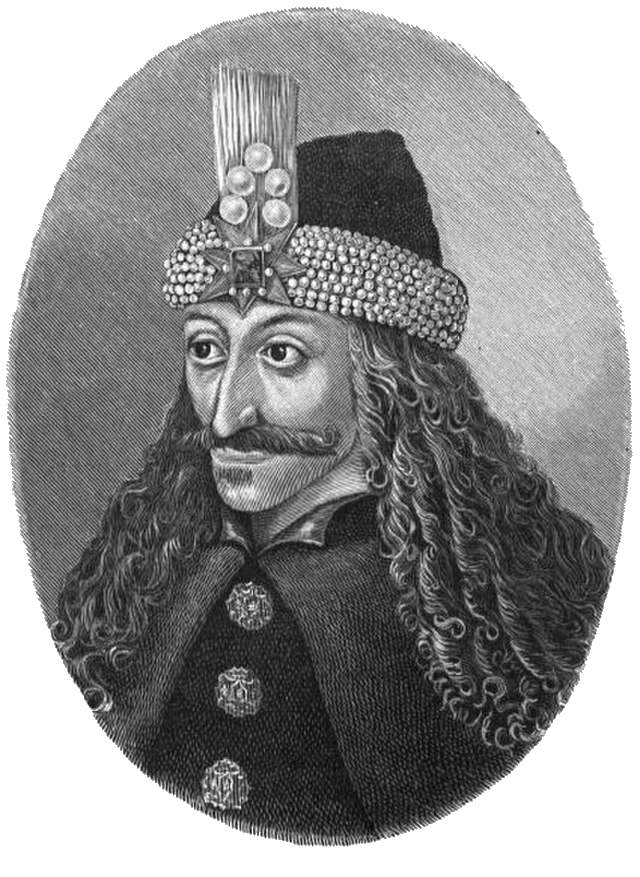
As a child during the civil war, Stefan was sent to Transylvania and placed under the protection of General John Hunyadi. About a year later, Stefan was sent to live with his cousin, Vlad III, who would become known as Vlad Tepisch, also known as Vlad Dracul, and Vlad the Impaler, and who later served as the inspiration for Dracula.
Vlad Tepes
Vlad III lent his support to Stefan and gave him 6,000 horses and men to enter Moldavia and roust out Petru Aron, who had been victorious over Alexandru cel Bun in the civil war. Stefan defeated Petru Aron who fled into Poland, where Stefan pursued him, but was not able to apprehend him.
Out of 36 battles, Stefan was victorious in 34 of them, defeating Hungarian, Polish and Ottoman attempts at invasion, but by 1486, after continual attacks from neighbors, he had to sign a Tributary State treaty with the Turks which gave Moldavia the right of a semi- autonomous rule, but recognized the Ottomans as suzerain, that is having ultimate ruling authority.
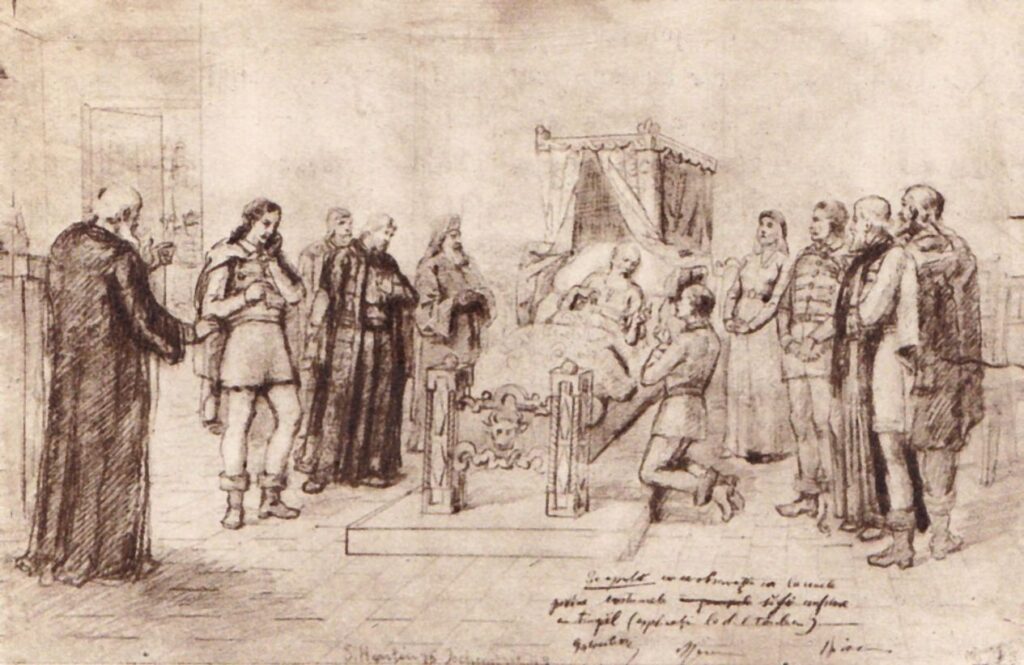
Stephan's death, as imagined by Sava Henția
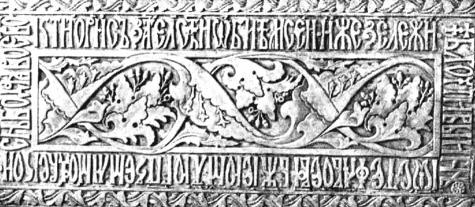
Stefan’s reign in Moldavia was hard won and always under attack, but his piety allowed several churches to be built, establishing religious edifices after each major military victory. Stefan died in Sucaeva, a main residence of Moldavian princes, and he was even canonized later. He is buried in the monastery of Putna, which was built and dedicated to the Virgin Mary by Stefan in 1470.
Tombstone of Stephan the Great of Moldavia
After his reign, Moldova was constantly being threatened by war from its enemies, and together with Transylvania and Muntenia (now in Romania), protection was attained through alliance and unification beginning in 1593.
Moldova Map 1908
Moldavia, like most European countries, had a complex history, being placed under the rule of several other governments over time. The Principality of Moldavia would fall under the Russian Empire and was called Bassarabia in 1812, After WWI it united with Romania until 1940 when it was ruled by the Soviets and was known as the Moldavian SSR. After the fall of the Soviet Union, Moldova was able to declare its independence as a Republic in 1991.
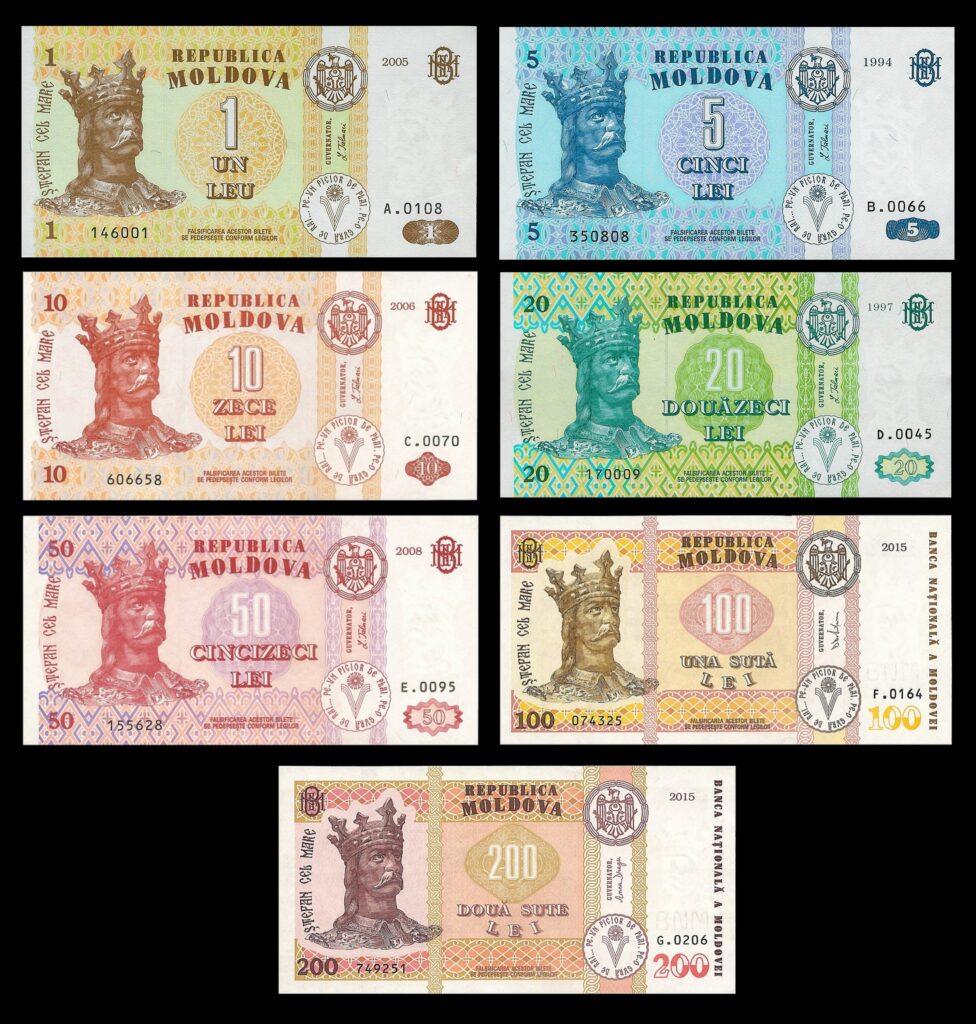
The Moldovan banknotes feature Stefan cel Mare on the front of all its banknotes, differences mainly in the color and denomination of each. Each banknote highlights an historic building illustrated on the back, Some depicting churches and monasteries that were important to Stefan cel Mare during his reign.
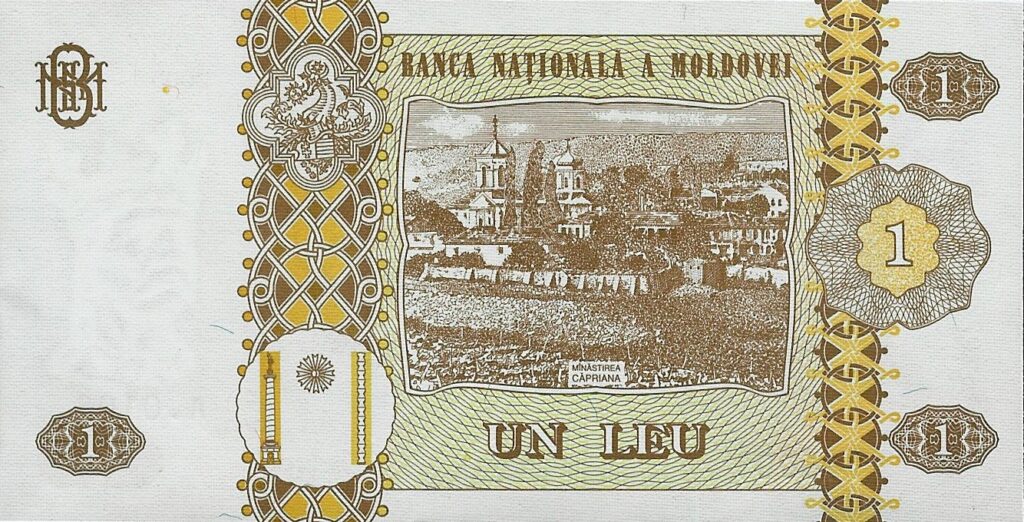
Moldova 1 Leu - 2000 Back showing Capriana Monastery
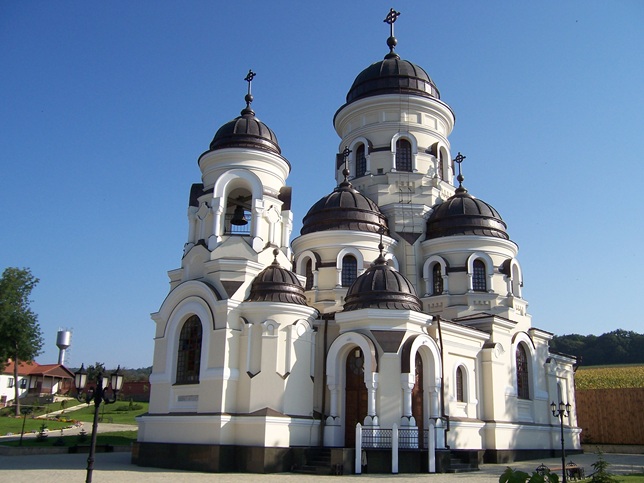
The back of the 1 Lei note has a vignette of the Capriana monastery. The grounds also have artesian wells and pavilions. It is said that there is still a large oak tree where Stefen Cel Mare evidently took rest after a battle.
Căpriana monastery courtesy of Oleg Alexandrov
Diego Delso, delso.photo, License CC BY-SA
Monasterio_de_Căpriana,_Căpriana,_Moldavia,_Diego Delso, delso.photo, License CC BY-SA
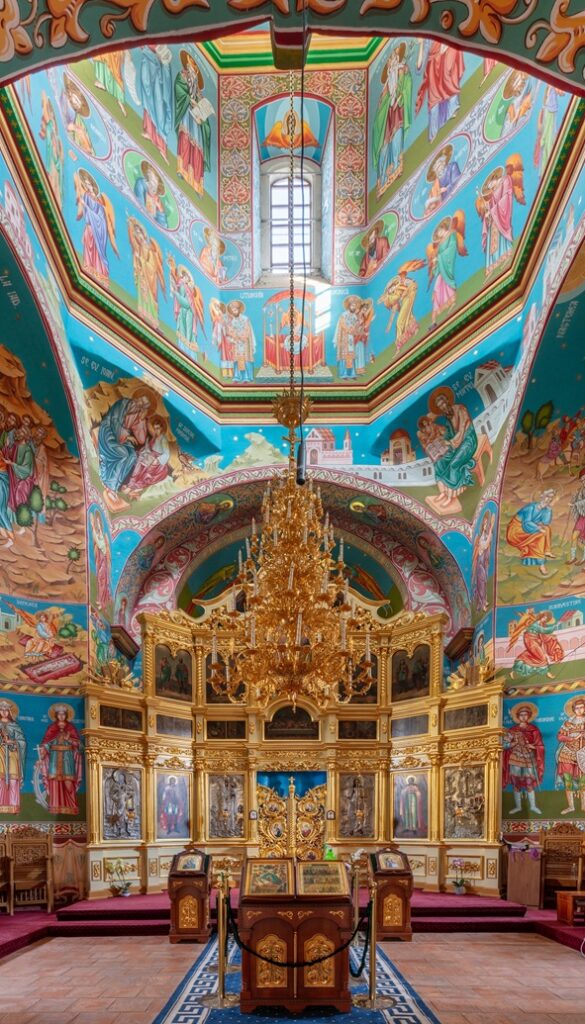
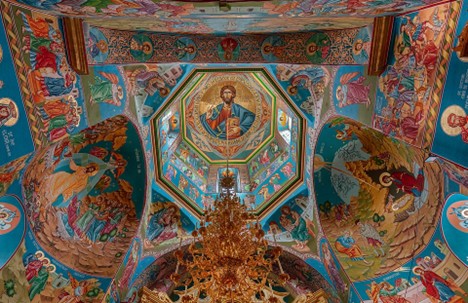
Though relatively close to the capital Chisinau, it is far from the noise and hubbub of the city. There are three churches on site, and the first building of the monastery complex is that of the church of the Assumption of the Blessed Virgin. It is the oldest existing church in Moldova. As with such places there are legends and lore that may or may not be true, but this one has a ring of truth to it:
Before the monastery was built, Stefan Cel Mare would often use the woods to hunt deer. His hunting party had once driven a deer to exhaustion and Stefan was getting ready to make his shot, but just then, the animal lowered it’s head, and Stefan had a feeling that it had bowed to him. This caused Stefan to take pity on the poor creature and spare its life, and they rode away.
Some hours later, a courier came to the hunting party and informed Stefan of his daughter’s birth. Later that night Stefan is said to have had a dream that there should be a monastery erected in the woods, and when it was constructed, it bore the name made of both the deer, called a Capra, and that of his daughter, Ana.
Capriana Monastery - courtesy of delso.photo, License CC BY-SA wikimedia commons
The first known record of the church is dated April 25, 1420, yet Capriana is still an active monastery with novices, monks and priests, though it was used as a warehouse and a school during the Soviets’ communist rule.
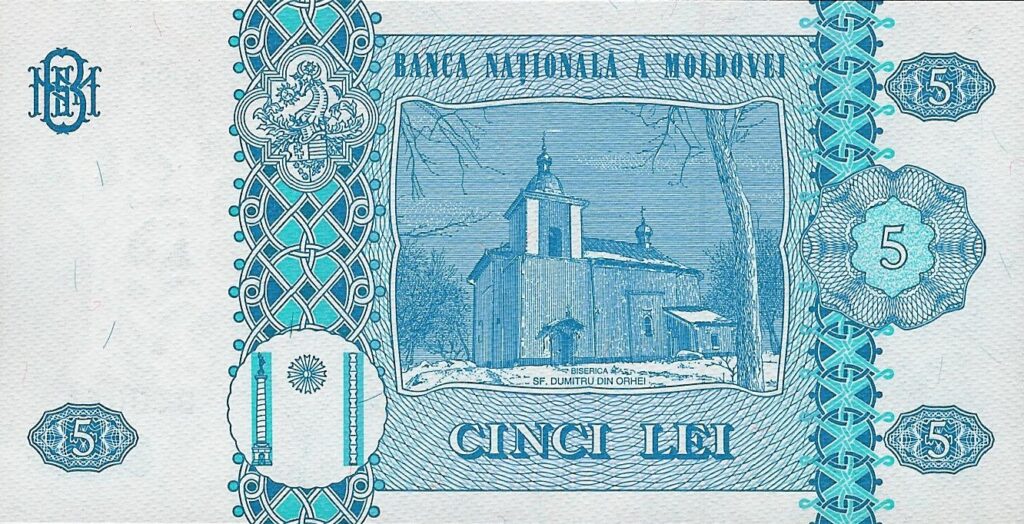
Moldova 5 Lei - 1994 Back showing St. Dimitru basilica, Orhei
Photo Courtesy of Principii ale CoEur în domeniul patrimoniului cultural
The 5 Lei note depicts the St. Dimitru basilica in Orhei, an Orthodox Church whose construction was completed in 1636. The interior of the church has many icons and paintings on the walls, many of which depict biblical stories in the Eastern Orthodoxy.
It’s construction was done during the reign of Vasile Lupu, after the time of Stefan Cel Mare, and served as major religious center in the eastern region, helping to bolster the Christian Faith and customs from the influence during the Ottoman empire’s suzerainty.
While many religious buildings were closed or faced alternative uses when the soviets were in power, St. Dimitru Church was able to stay open during the communist rule. Today it is still an active church which remains open every day for visitation.
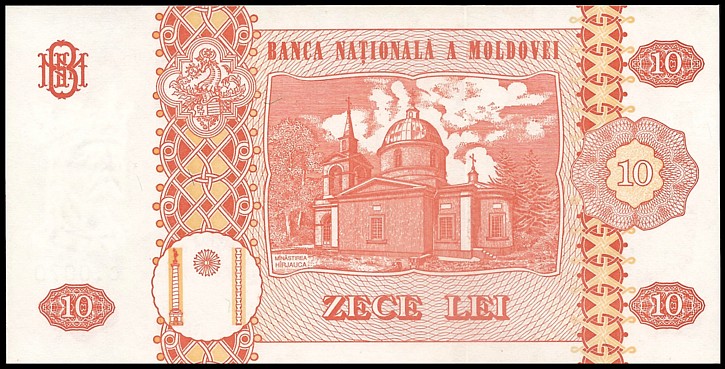
Moldova 10 Lei - 2006 Back showing Hirjauca Monastery
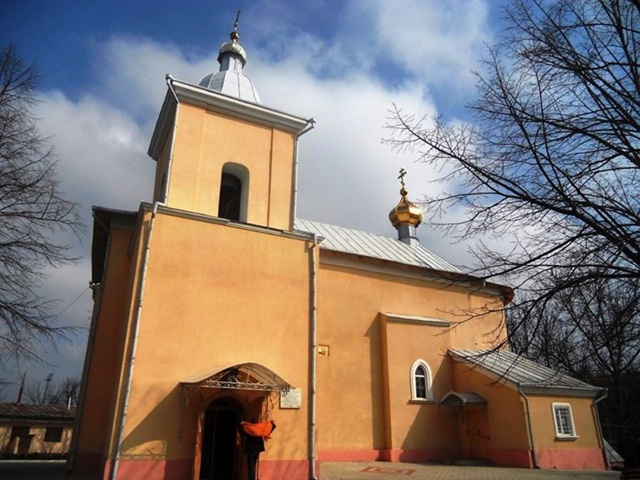
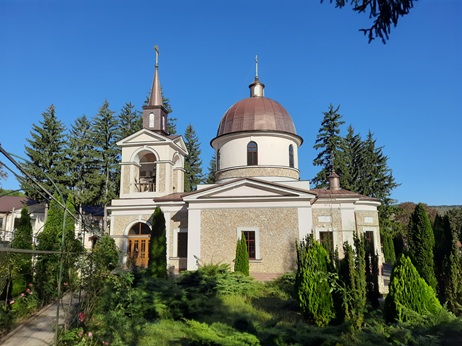
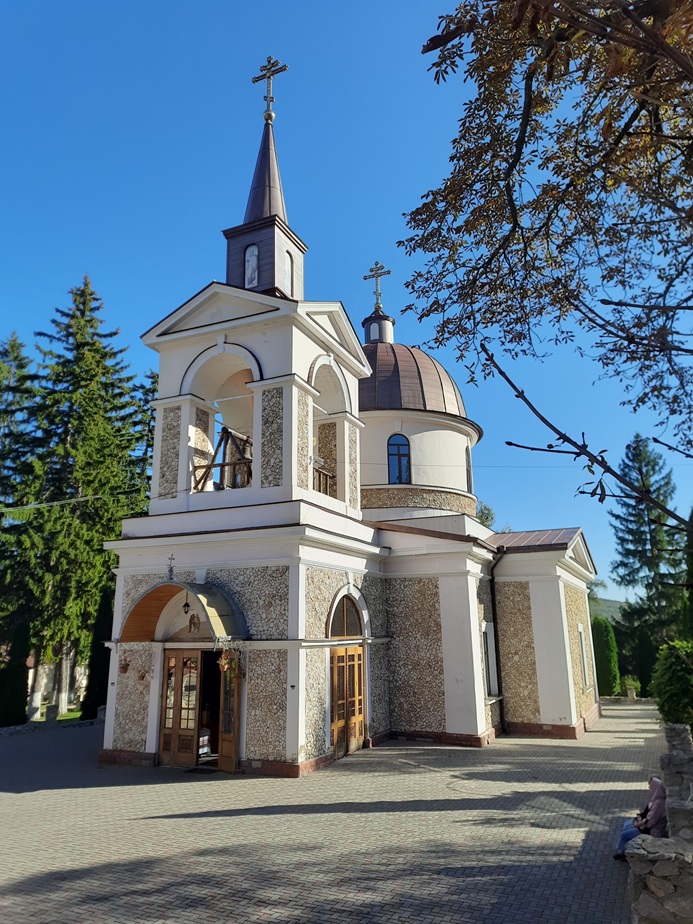
The 10 Lei banknote has the Hirjauca monastery. As an eastern Orthodox monastery complex, Hirjauca houses several buildings within it’s walls.
Originally a prayer house built in 1740, it eventually attracted some monks from a nearby monastery, and it soon developed into its very own monastery. It is still an active place of worship, and is open daily to visitors.
Hîrjauca Mănăstirea
Hîrjauca Mănăstirea
Originally a prayer house built in 1740, it eventually attracted some monks from a nearby monastery, and it soon developed into its own monastery. It is still an active place of worship, and is open daily to visitors.
Hîrjauca Mănăstirea interior
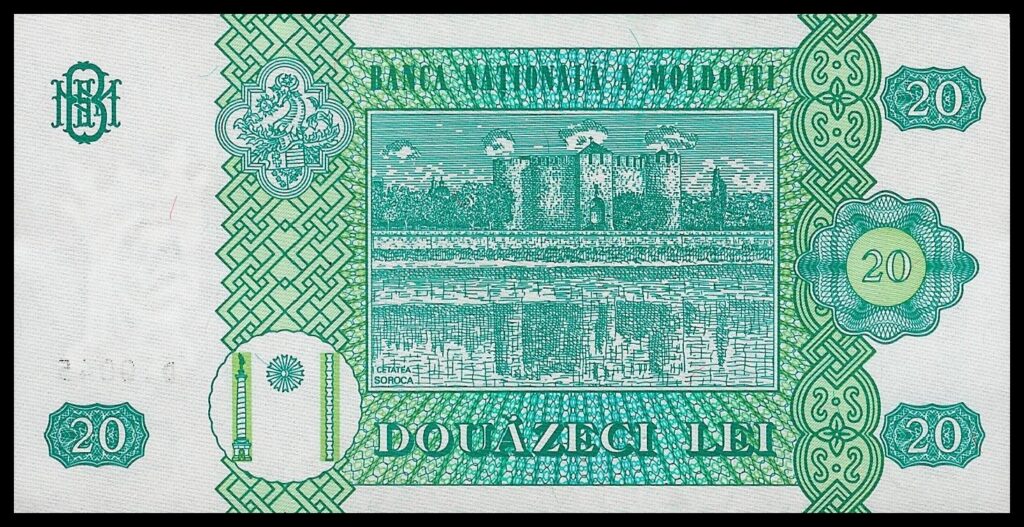
Moldova 20 Lei - 1994 Back showing Soroca castle
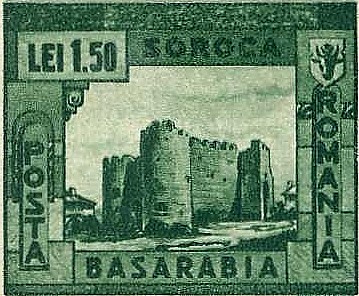
Moldovan Stamp showing Soroca Castle
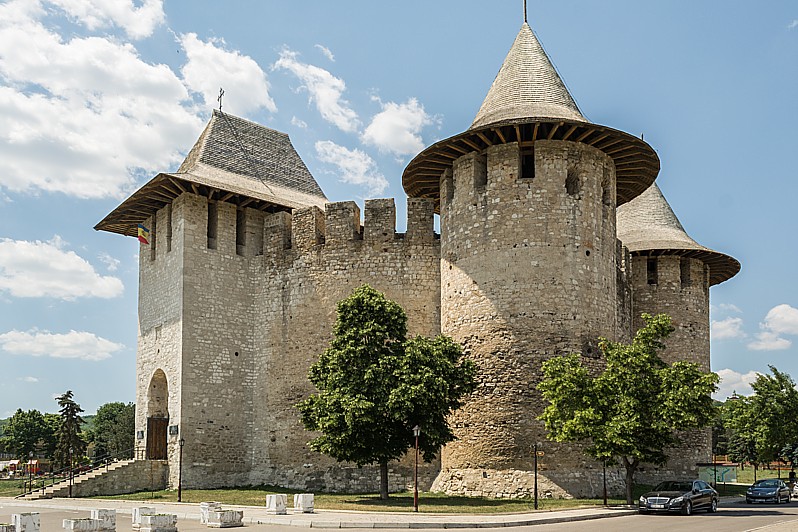
The Soroca castle fortress is part of a medieval chain of castle fortifications stretching along the Dniester River which runs through Moldova
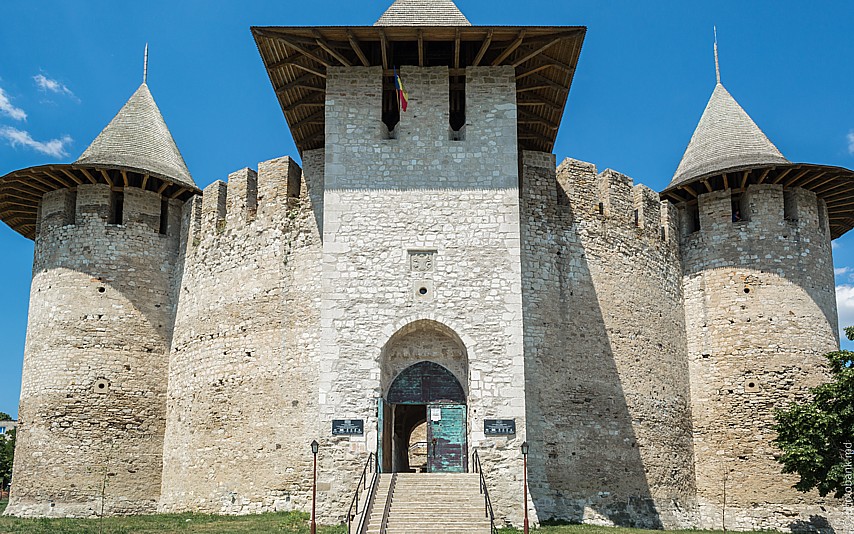
Soroca Fortress
It is likely that the original fortress started in the mid 1300’s when a small wood fort was erected to protect a strategic Dniester River crossing. Some difficulty in dating is due to the many wars that were almost a constant occurrence during that era of history.
Soroca Fortress
The Soroca castle fortress has undergone restoration and there are now roofs on top of the towers which give it a different look than the earlier depiction shown on the banknote.
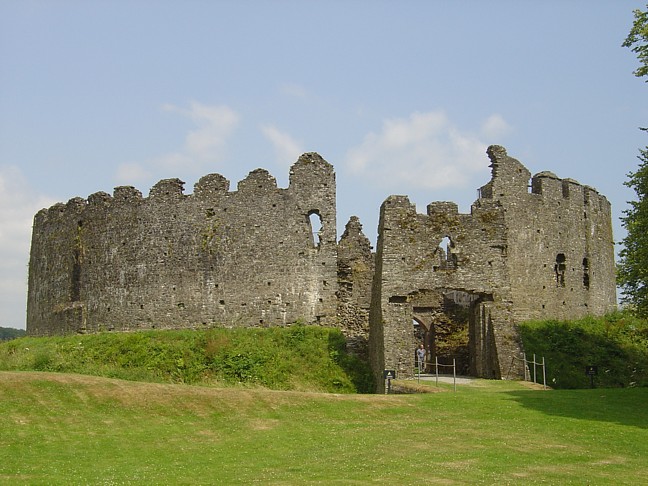
The stone edifice history shown here is better known and it was built between 1543 and 1546, under the direction of the then leader, Petru Rares. Construction of the castle required stone masons and architects to be imported from elsewhere, and it is thought that, due to the design of the castle, these workers came from England. Indeed, there is a marked similarity to the ruins of Restormel Castle in Cornwall, England.
Restormel Castle in Cornwall, UK dis[;ayng some similar characteristics due to the same builders.
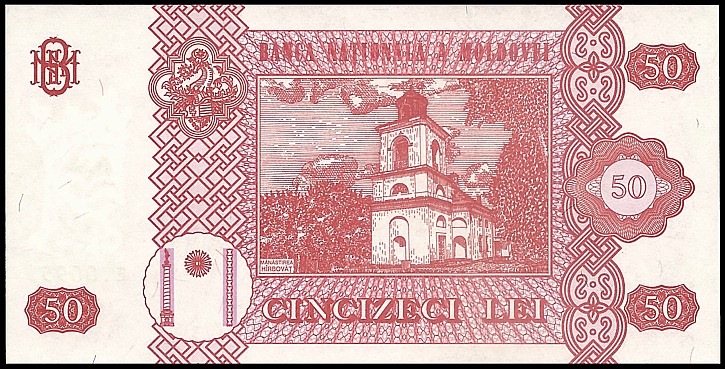
Moldova 50 Lei 2008 Back showing Hîrbovăţ monastery
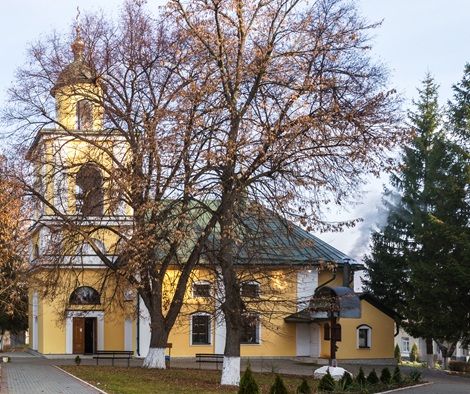
The Hîrbovăţ monastery originated in 1730 by Canstantin Carpuz. It suffered at least three destructions by Ottoman incursions, which also destroyed historical records housed within. It was later rebuilt in the 1800’s
In 1962, during the Soviet control of the area, the monastery was seized by the government, and a partial destruction of the complex occurred. Church bells were removed and many icons and monastical records were burned. The communists turned the monastery into a handicap school, and the temple turned into a stable.
MĂNĂSTIREA HÎRBOVĂŢ Wikimedia cc4.0 by Tanyaofearth
In the late 1980’s restoration of the monastery slowly began, and in 1992 the temple was opened for worship after the collapse of the Soviet Union
Mănăstirea_„Adormirea_Maicii_Domnului”_din_sat._Hîrbovăt Photo courtesy of Vladikh via Wikimedia - PDImage
Mănăstirea_„Adormirea_Maicii_Domnului”_din_sat._Hîrbovăț Photo courtesy of Vladikh via Wikimedia - PDImage
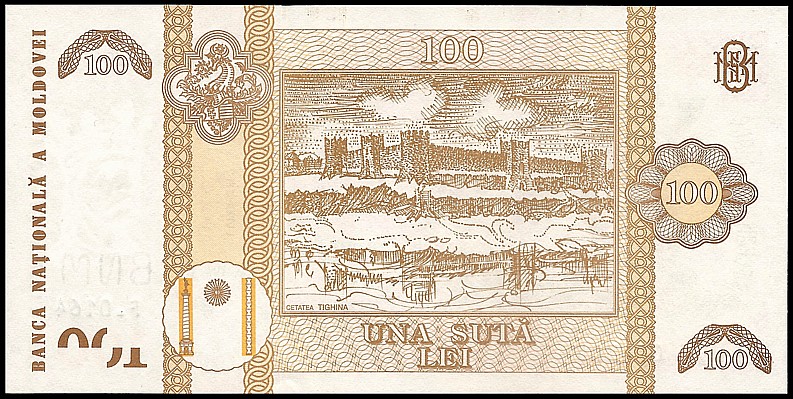
Moldova 100 Lei 20015 Back showing Tighina citadel
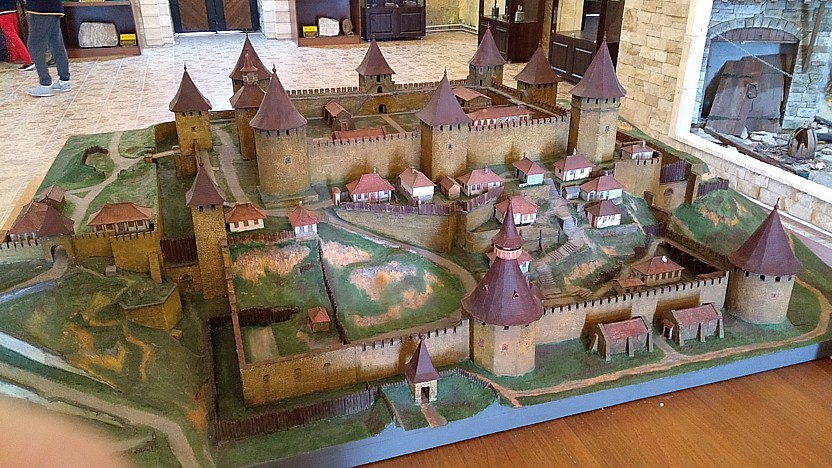
In 2023 the United Nations Development Project completed a conservation effort which helped the Tighina citadel / Bender fortress by preserving the eastern wall, complete restoration of 3 of the citadel’s towers, and other structural items that were threatening to fall over. The effort used construction techniques and materials of the original construction effort and used over 4,492 cubic feet (127.2 cubic meters) of mortar which was manufactured using the original time-period formula and used in the conservation effort.
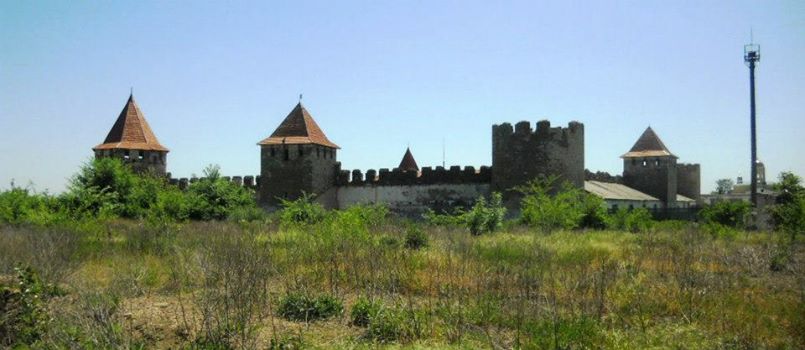
Cetatea Tighina photo by Strainubot
Cetatea Tighina model - photo courtesy of Helgie12 via Wikimedia CC4
The citadel is thought to have been originally constructed in the 12th century as an earthen and wood structure, but the only surviving document during the time of Stefan Cel Mare refers to there being a customs guard in Tighina, not a citadel or fortress. The first mention of the fortress on record comes from the Moldavian-Polish Chronicle during the 16th century which mentions it in reference to the Ottoman Empire taking possession of the fortress by Sultan Suleiman.
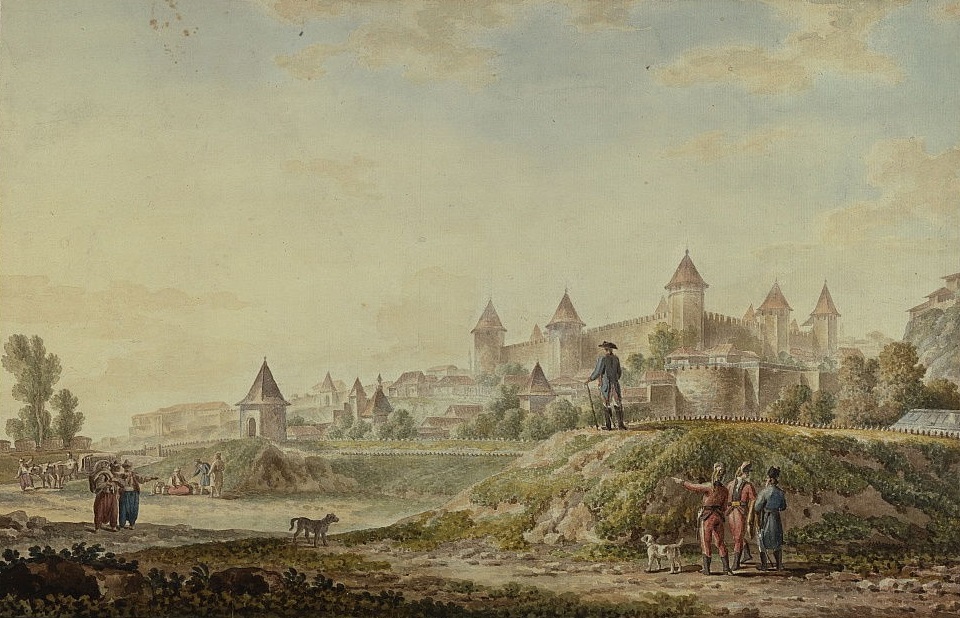
View of the fortress in Bender - 1790 by Mikhail Ivanov
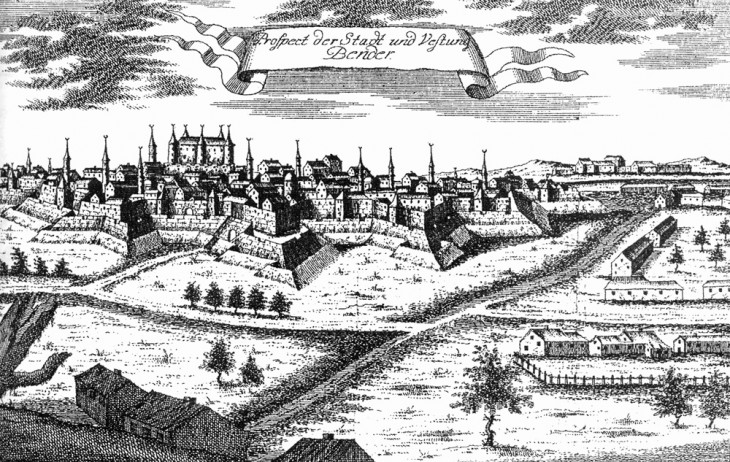
The citadel as it is now, was built in 1538 after the Suleiman’s conquest of the area. It was then renamed Bender Fortress. The fortress survived multiple attacks and sieges, until it fell to Russian forces in 1710, then again in 1770, and a third time in 1812.
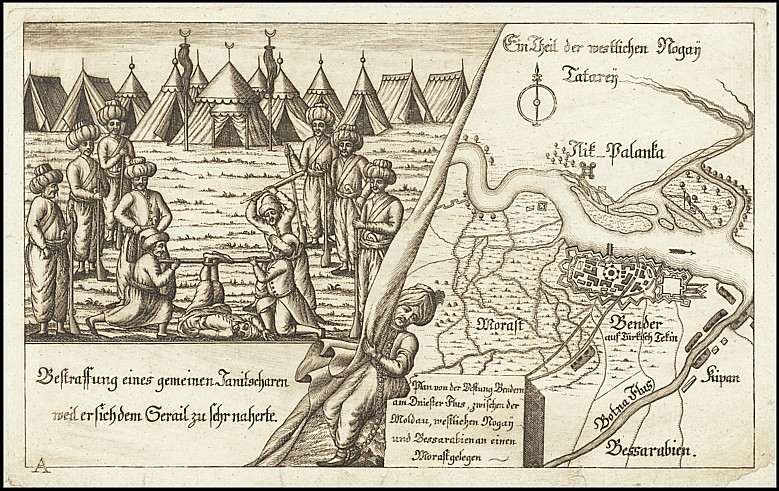
1713 plan for the Bender Fortress – also showing a punishment for misbehaving.
Cetatea Tighina 18th century
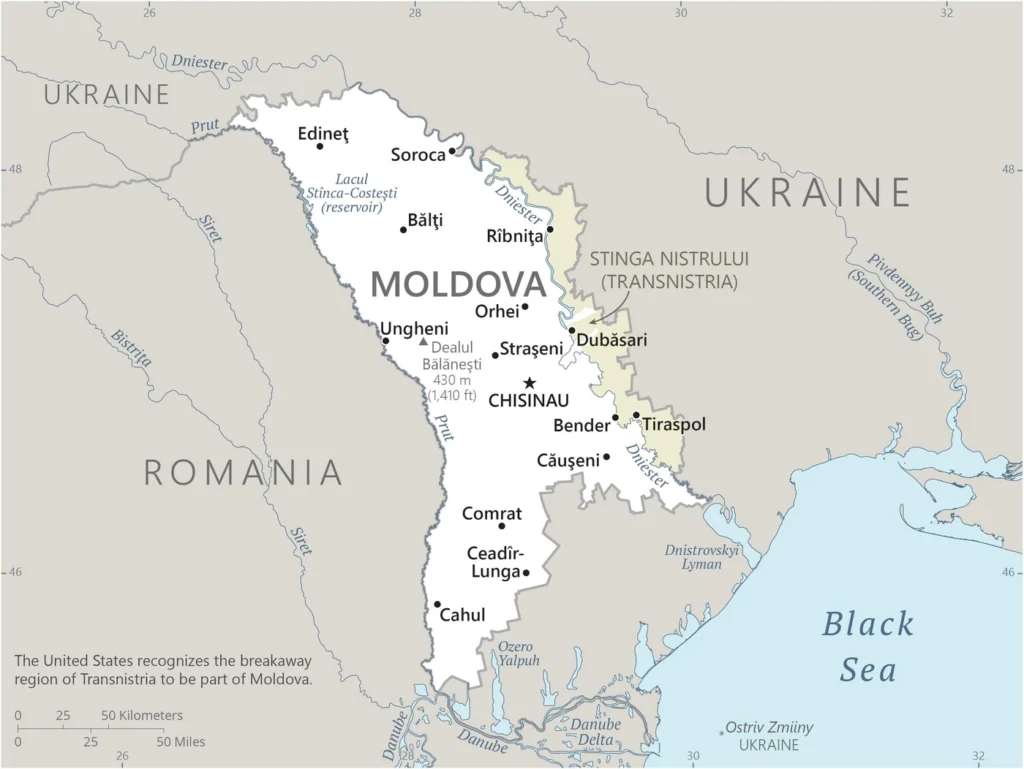
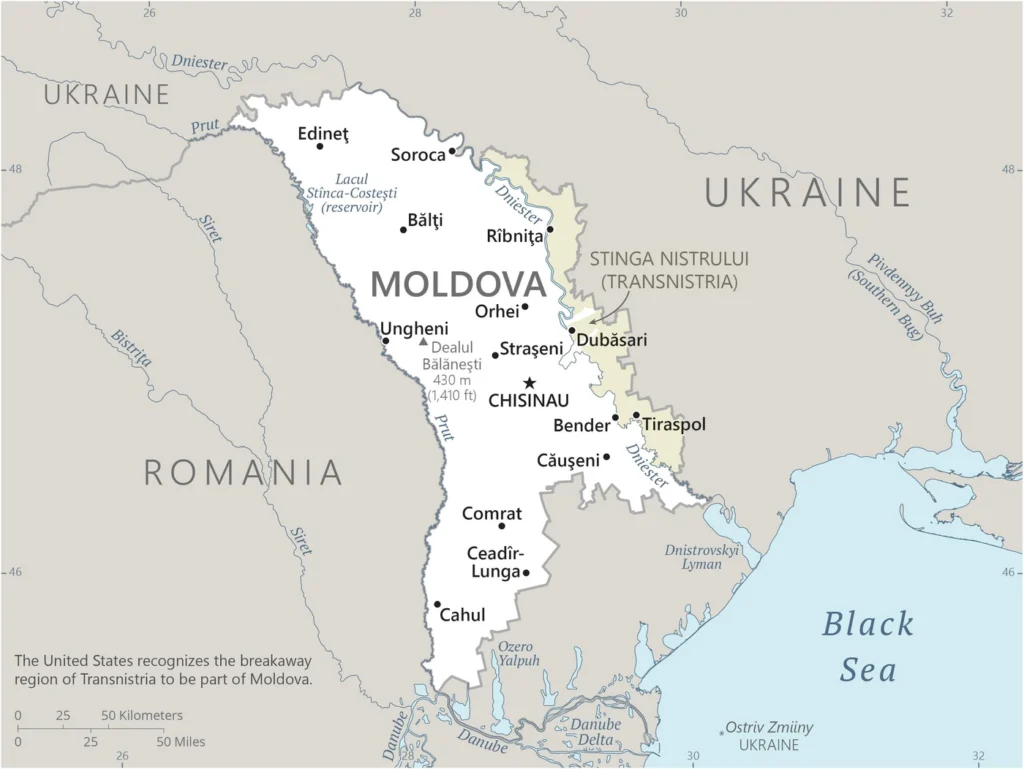
The Tighina Citadel/Bender Fortress is now under the control of the Transnistrian/Pridnestrovian Moldavian Republic, which is a break-away nation that is unrecognized internationally, but controls a section of land from the Dniester River to the Ukrainian border. Internationally, it is known as Transnistria, but locally it is ardently called Pridnestrovia.
Moldova-Ukraine border highlighting the Transnistria/Pridnestrovia area
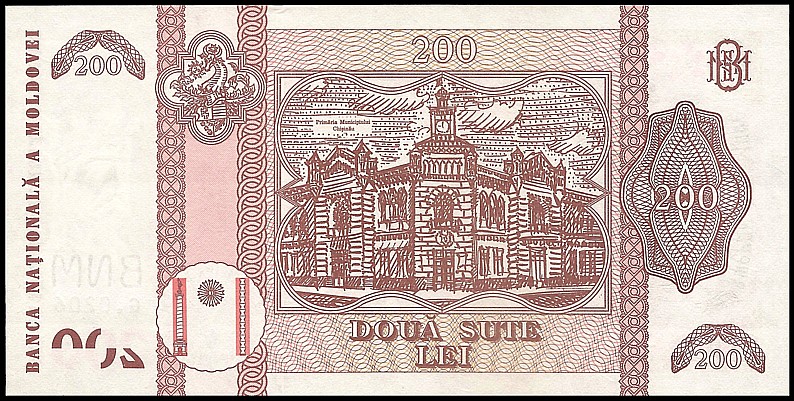
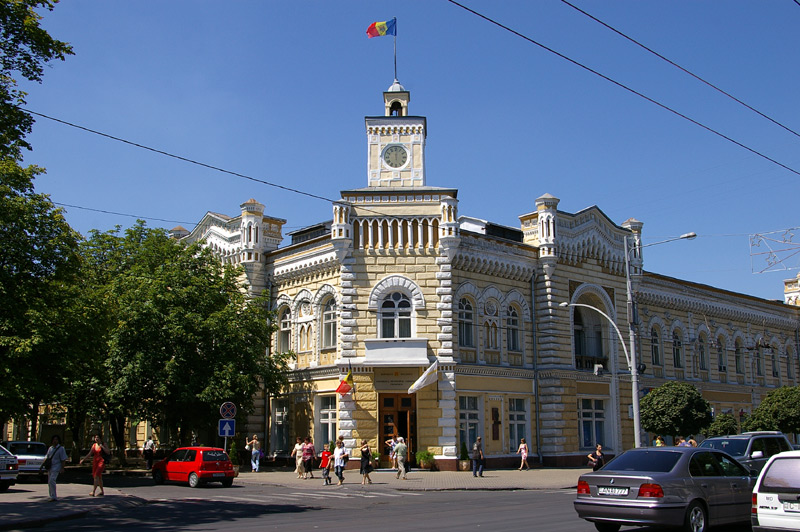
Moldova 200 Lei - 2015 Back showing the Chişinău Municipal building
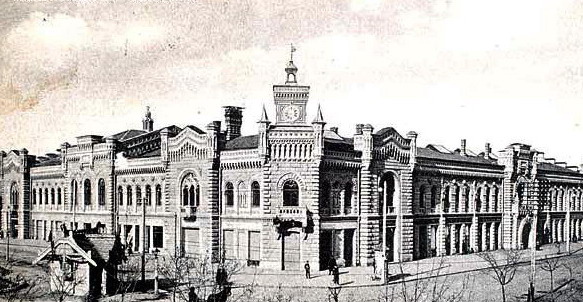
Early photograph of the Chisinau Municipal Building.
Chişinău’s longest serving mayor (1877-1903 – a 26 year service!), Karol (Karl) Schmidt, authorized a new city hall, or local Duma, to be constructed on the site of a former fire station. The new building was completed in 1902. Chişinău’s architect Mitrofan Elladi drew up the plans and construction was managed by Alexandru Bernardazzi.
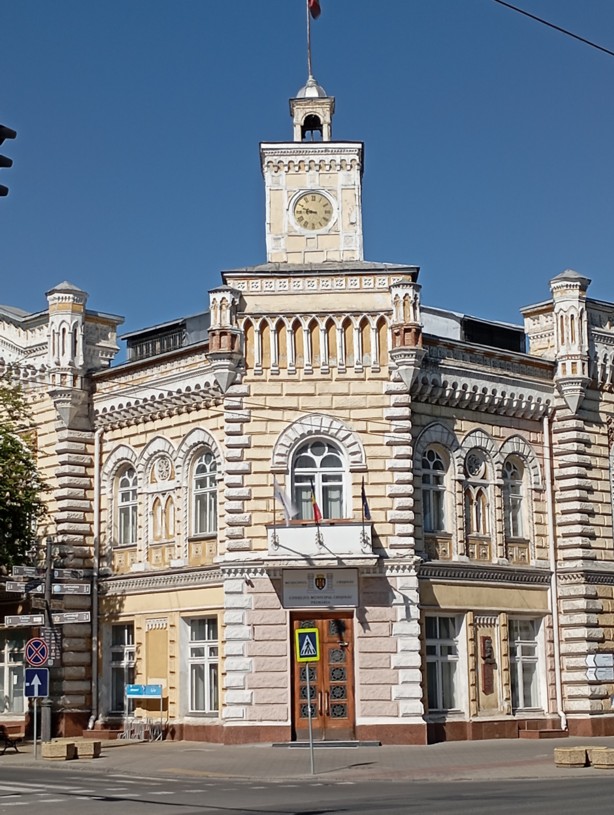
During WWII, the building was heavily damaged and rebuilt in 1944, when it was destroyed yet again! It underwent reconstruction once more, using historical photos and architectural blueprints. The second reconstruction was completed in 1948, and the city officials, perhaps fearing another destruction, delayed moving in until 1951.
Chisinau City Hall by Vladislav Litvinov
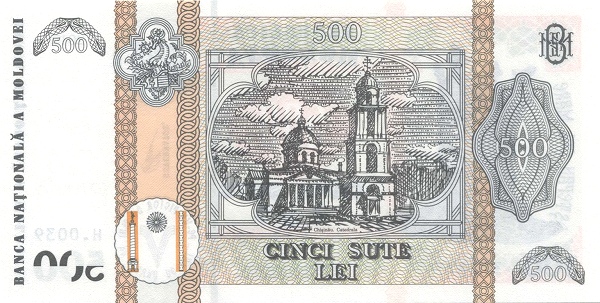
Courtesy of Banknote.ws Moldova 500 showing the Chisinau Cathedral
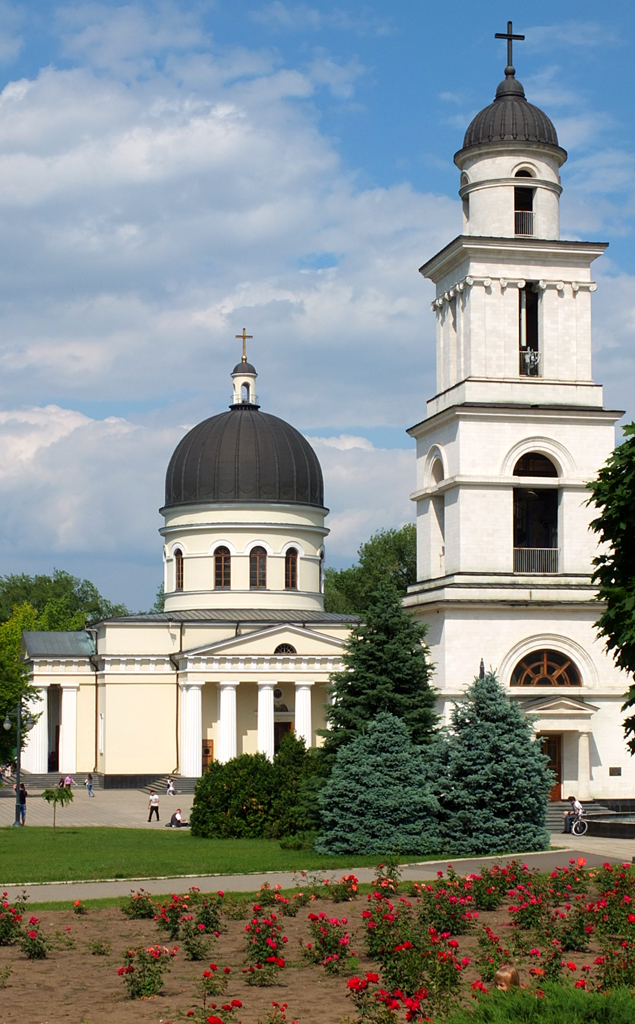
The Nativity Cathedral in Chişinău is outwardly a rather plain columned edifice built in 1836 by Architect Avraam Melnikov, one of the last neoclassical architects of the era. The building suffered damage from an earthquake in 1940 and then additional damage during WWII. Subsequent restorations made some changes in the building design, but it was kept within the neoclassical theme. The dome was rebuilt in 1956 and then again in 1997.
The Nativity Cathedral and Bell Tower
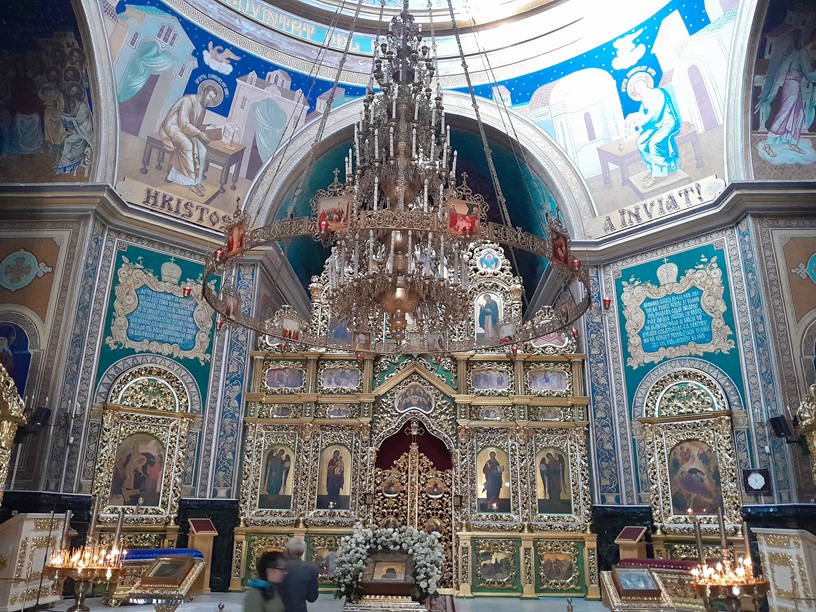
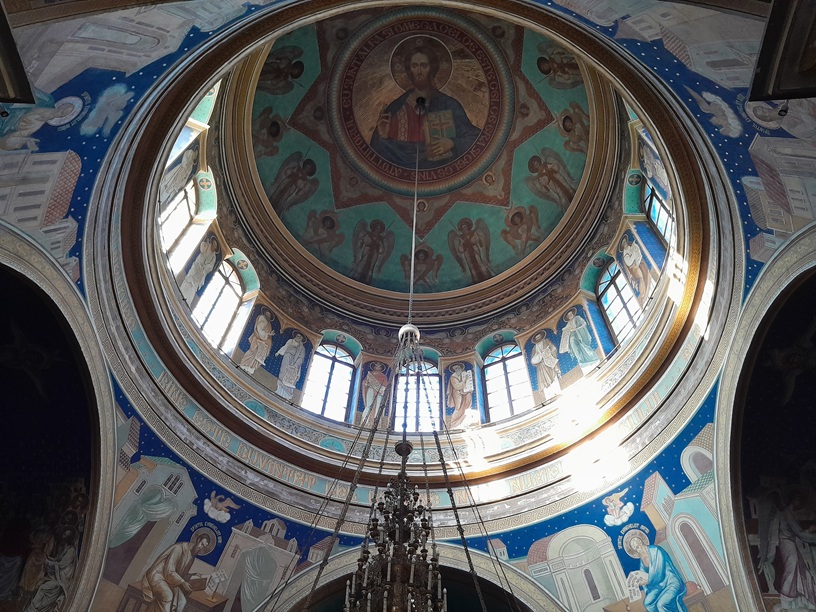
When Moldova was under the heavy hand of communism and administered by the USSR, religion was heavily restricted and worship was not allowed at the cathedral. The walls were stripped bare, and the Soviets instead used it as an exhibition hall. Today it is fully open to religious services and the walls are painted in traditional orthodox murals.
Nativity Cathedral Interior - by August Dominus
There is one main altar and two side altars. The main altar is the Nativity of the Lord, while the left altar is dedicated to St. John, and the right altar is dedicated to St. Nicholas.
Nativity Cathedral Interior Dome - by August Dominus
The bell tower is separate from the cathedral, about 130 feet (40 meters) away. It too was constructed in 1836, but was demolished in the 1960’s, only being rebuilt in 1998.
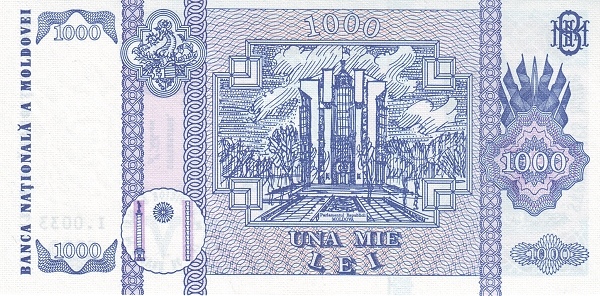
Moldova 1000 Lei - back showing the Presidential Palace in Chişinău
And finally, he Presidential Palace on the back of the 1000 Lei is the newest building on Moldovan banknotes.
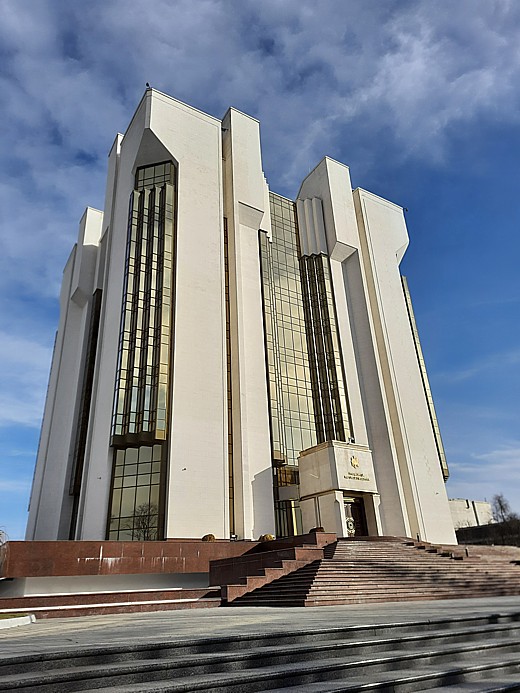
the Presidential Palace was built in just three years, with completion taking place in 1987. The architectural design by Viktor Iavorski incorporates modern conveniences with symbolic and functional aspects.
Moldovan Presidential Palace
Once the Iron Curtain fell and Moldova gained it’s independence, the building naturally converted to be used to house and support the president and presidential duties.
Under President Igor Dodon, who served as president from 2016-2020, renovations and repairs were undertaken and finished in October 2018, which included a wine cellar, an artificial lake and a chicken farm.